
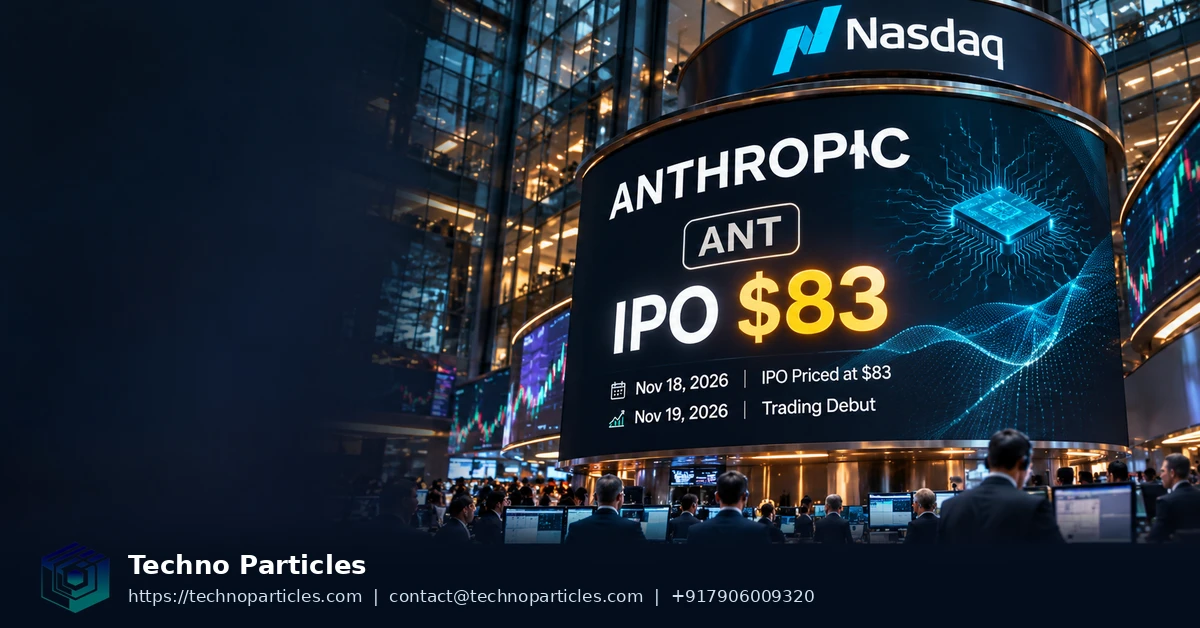
Claims that Anthropic priced an initial public offering at $83 per share and planned to list on Nasdaq under the ticker ANT require confirmation from official sources. Until the offering documents and exchange listing can be independently verified, readers should treat the reported price, schedule and record-setting description as unconfirmed.
| Reported IPO detail | What readers should verify |
|---|---|
| $83 offering price | The price in the final prospectus or official pricing announcement |
| Nasdaq listing under ANT | The exchange listing and trading status |
| Record-sized offering | The comparison used, such as gross proceeds or valuation |
What changed in the Anthropic IPO at $83?
The reported transaction terms include an $83 price and an offering of 980 million shares. Those figures are attributed to an Anthropic IPO pricing announcement, but the announcement and its publication date have not been independently verified here.
A separate SEC filing attributed to Anthropic should be checked alongside the final prospectus for the applicable offering terms. An effective registration statement and an exchange listing are separate matters, and neither establishes what price shares will fetch when trading begins.
The distinction matters because the offering price is the price set for the IPO allocation, while trades in the public market occur at prices buyers and sellers agree upon. A first trade above or below the offering price would therefore answer a different question from how the IPO itself was priced.
The reported characterization of the deal as the largest IPO on record is attributed to an Associated Press report. Readers should check the report and the measure behind that comparison before relying on the description.
For businesses considering how frontier AI could fit their operations, the practical question is separate from a share offering: whether a particular workflow benefits from an AI development service and what it would cost to deploy and maintain.
How the offering is structured
Anthropic’s pricing announcement describes an offering of 980 million Class A shares, including shares sold by the company and shares sold by existing stockholders. The distinction determines who receives the proceeds from each portion of the sale.
Primary and secondary shares
The company announcement attributes 956,351,354 shares to Anthropic and 23,648,646 shares to selling stockholders. Proceeds from the company’s shares go to Anthropic, while proceeds from the selling stockholders’ shares go to those sellers, subject to the offering terms and expenses described in the prospectus.
That split matters when assessing how much capital an IPO can provide to the business: the total number of shares offered includes both newly issued shares and shares sold by existing holders. Readers should consult the final prospectus for the applicable proceeds and expense figures.
Additional shares and closing conditions
The announcement also describes an option allowing underwriters to purchase up to 147 million additional shares within 30 days. An option is a potential addition to the offering, so the initial share count alone does not establish how many shares will ultimately be sold.
The announced closing date is November 20, 2026, subject to customary closing conditions. The pricing of an offering and its closing are separate stages: the stated date is an expectation, not confirmation that the transaction has closed.
For a business assessing the operational implications of a major financing, project consultation can help frame questions about planned investments and delivery requirements. The offering documents remain the source for the transaction’s terms.

Why AI infrastructure financing matters
Frontier AI companies face a financing question that extends beyond the proceeds of any share offering: how they will meet long-term computing and infrastructure obligations while funding operations. The reported terms of Anthropic’s offering and its associated commitments remain unconfirmed in this article, so they cannot establish the scale of its financing needs.
The SEC filing attributed to Anthropic is the appropriate document to check for any disclosed infrastructure commitments, strategic financing arrangements and planned uses of proceeds. Readers should distinguish contractual obligations from estimates and look at when payments are due before comparing them with money raised in an offering.
For businesses evaluating generative AI development, a provider’s capital plans may provide useful context, but they do not establish the cost or suitability of a particular application.
Governance and shareholder oversight
The governance documents deserve attention alongside the offering terms. A company’s legal structure, board appointment rules and share classes determine which decisions shareholders can influence and who has authority over long-term strategy. Those arrangements cannot be assessed reliably without checking the applicable prospectus and corporate documents.
In particular, readers should examine whether different classes of shares carry different voting rights and whether any person or group can appoint directors. The economic interest represented by a share and the voting power attached to it are separate questions.
For organizations considering how to document their own decision-making processes, the employee management systems page describes a related approach to managing internal operations. It does not establish how Anthropic is governed.

What to watch after the Nasdaq debut
After an IPO, a company's filings can help readers assess whether its financial position and operating performance support its plans. The useful comparison is between what management says it intends to do and what later reports show it has done. The registration statement provides a starting point for examining the risks and commitments Anthropic disclosed.
Capital and dilution signals
Cash needs deserve attention alongside the cost and timing of infrastructure commitments. A large commitment describes an obligation over time; it does not, by itself, show the cash required in a particular reporting period. Comparing payment schedules with available cash and financing can make the scale of that obligation easier to interpret.
Shareholders can also examine how future share issuance or the release of shares subject to restrictions may affect the number of shares available to trade. Dilution concerns an existing holder's proportionate ownership; a lock-up provision addresses when specified holders may sell. They answer different questions, so both merit attention when reading the prospectus.
Operating evidence
Revenue and customer growth are most useful when read alongside losses and spending. Growth can show demand, while the relationship between revenue and expenses helps readers understand the resources needed to support it. Changes across reporting periods provide more context than a single figure viewed alone.
Execution also matters: plans to add infrastructure or staff are different from completed projects and their financial effects. Later disclosures can show how those plans progress and whether management changes its expectations. Readers assessing the wider business context can use the company's services overview to see the kinds of digital projects in which AI tools may be used; it is not evidence of Anthropic's financial performance.
Conclusion
Treat the Anthropic IPO at $83 as a signal of investor demand for frontier AI, not proof of how the business or its shares will perform. Before forming a view, read the final prospectus and subsequent filings through the SEC filing.


Leave a comment
Your email stays private. You can see your comment immediately on this browser. Others see it after approval.