


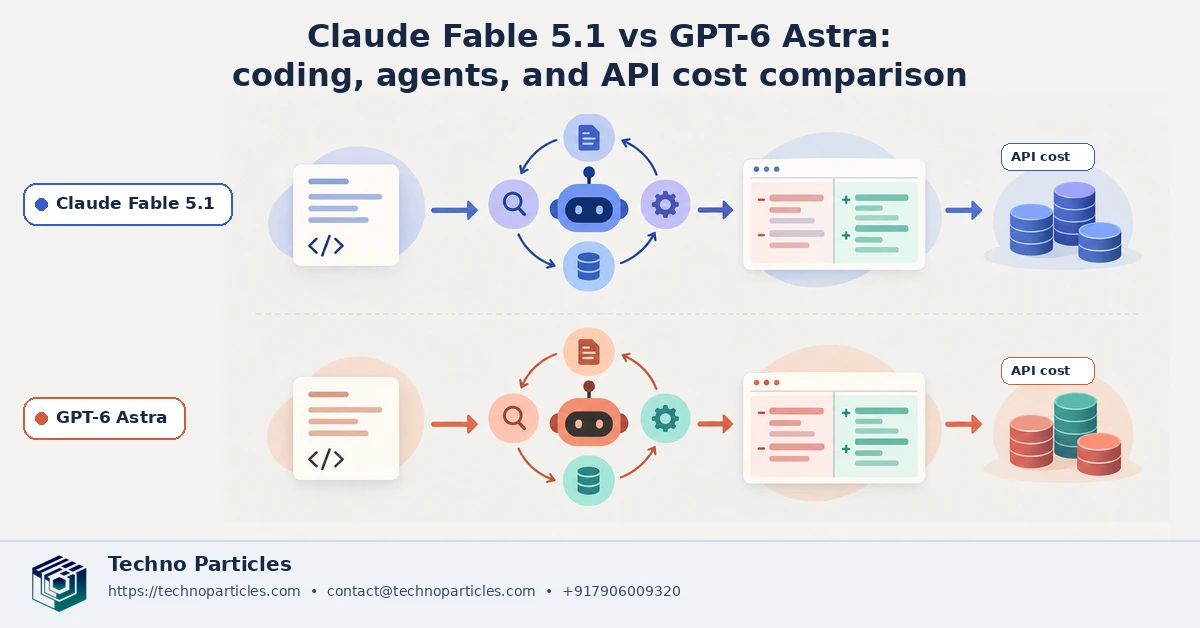
The Claude Fable 5.1 vs GPT-6 Astra comparison is less about finding a universal winner and more about matching each model to the way your team builds software and runs AI agents. Anthropic says Fable 5.1 is generally available for coding, knowledge work, long-running agentic tasks, Claude Code, Claude Cowork, the Claude API, and major cloud marketplaces. OpenAIâs September 2026 announcement positions GPT-6 Astra around computer use, software engineering, browsing, and multi-step workflows through the API.
That difference in emphasis matters. A coding assistant that edits a repository, reviews a pull request, and explains a failed test may need a different workflow from an agent that navigates a browser, operates desktop software, or coordinates several tools. Before choosing a model, define the actions it must take, the amount of context it repeatedly receives, and where human approval is required.
Claude Fable 5.1 vs GPT-6 Astra: What changes for developers?
Both models target serious development and agent workloads, but their published benchmark tables do not provide a final apples-to-apples verdict. Vendor-reported results show Astra ahead on some coding and computer-use tests, while Fable 5.1 leads on others. Differences in prompts, harnesses, tool definitions, context length, and evaluation timing can materially affect those results, so a small private test is more useful than a headline ranking.
Agent design is as important as model selection
For a reliable implementation, separate planning, tool execution, verification, and escalation. Give the agent narrow permissions, log tool calls, cap spending, and require confirmation before deployment, data deletion, payments, or irreversible account changes. This is especially important when browser or computer-use abilities are involved.
Teams planning a production workflow can also connect these choices to broader application development services, where authentication, dashboards, audit trails, and fallback logic turn a model demo into a maintainable system.
API cost comparison: equal list prices, different economics
At standard rates, Claude Fable 5.1 and GPT-6 Astra both cost $10 per million input tokens and $50 per million output tokens. The more important difference appears in repeated context. Anthropic lists Fable 5.1 cache reads at $0.25 per million tokens, while OpenAI lists Astra cached input at $1 per million tokens under its standard short-context pricing. For agents that repeatedly send repository instructions, tool schemas, policy documents, or conversation history, cache behavior can materially change the monthly bill.
Anthropic also estimates that Fable 5.1 reduces typical workload costs by about 25%, with savings of up to 45% for highly agentic workloads. Those figures are company estimates, not an independent cost audit. Your actual result will depend on cache-hit rates, output length, retry frequency, tool-call design, and whether a workflow uses separate long-context or processing tiers.
Build a workload-based cost test
Instead of comparing headline prices alone, record the tokens and tool calls for a representative task. Test a bug-fix loop, for example, with repository inspection, code changes, test execution, error recovery, and final review. Then repeat the same scenario with a browser workflow or document-processing agent. Track successful completions, approval pauses, retries, latency, and total tokensânot just the first response.
A practical architecture can route routine classification or summarisation to a smaller model while reserving Fable 5.1 or Astra for planning, coding, and difficult recovery steps. Keep prompts modular so stable instructions can be cached, and trim obsolete history before each tool cycle. Teams building these controls may benefit from combining model access with generative AI development services for agent orchestration, monitoring, and workflow integration.
Availability and operational safeguards
Fable 5.1 is available through Claude Code, Claude Cowork, the Claude API, and major cloud marketplaces. GPT-6 Astra is available through the API under the model ID gpt-6-astra. In either case, production access should be checked against current account permissions, regional support, rate limits, and the providerâs safety requirements before a rollout.
Claude Fable 5.1 vs GPT-6 Astra: Coding, Agents, and API Cost Comparison - Techno Particles
Permissions, observability, and fallback planning
Availability is only the first operational question. Before connecting either model to production systems, define which tools the agent can call and which data it may access. Repository changes, customer records, financial actions, and account settings should use separate permissions wherever possible. Read-only discovery can often run automatically, while writes require a review step or an approval queue.
Computer-use workflows deserve additional controls because the model may interact with interfaces that were not designed as stable APIs. Use isolated browser sessions, restrict credentials, block unexpected domains, and capture screenshots or structured action logs when the workflow handles sensitive information. A human should be able to pause the run, inspect the proposed action, and revoke access without restarting the entire system.
Which model fits which workload?
Fable 5.1 may be attractive for teams whose agents repeatedly reuse large instructions, tool definitions, or project context, particularly when its lower listed cache-read price produces strong cache-hit rates. Its reported savings estimate should still be validated with your own prompts and traffic patterns. Astra may fit teams prioritising computer use, browsing, and software-engineering workflows, but its value likewise depends on completion quality, recovery behaviour, and the amount of supervision required.
For coding teams, compare both models on the same repository tasks: issue understanding, file discovery, patch quality, test repair, documentation, and pull-request review. For business automation, test structured extraction, CRM updates, approval routing, and failure recovery. A model that needs fewer retries or produces safer tool calls can be cheaper overall even when token prices look identical.
Teams turning these evaluations into internal dashboards, audit trails, or customer-facing workflows can pair model testing with project consultation services to define measurable rollout criteria and integration boundaries.
Make the comparison repeatable
Keep prompts, tool schemas, permissions, temperature settings, and evaluation cases fixed during each test round. Record cost per successful task, latency, human interventions, cache hits, and rollback events. Re-run the suite after provider updates, because model behaviour and pricing tiers can change independently of your application code.
Read benchmark results as signals, not verdicts
Vendor-published benchmark tables place GPT-6 Astra ahead on some coding and computer-use evaluations, while Claude Fable 5.1 leads on others. These results are useful for identifying promising test areas, but they are not an independent, apples-to-apples ranking. Differences in prompts, scaffolding, tool definitions, context limits, and evaluation criteria can change the outcome. A team choosing between Claude Fable 5.1 vs GPT-6 Astra should therefore treat public scores as starting points for its own validation.
Match the model to the agent loop
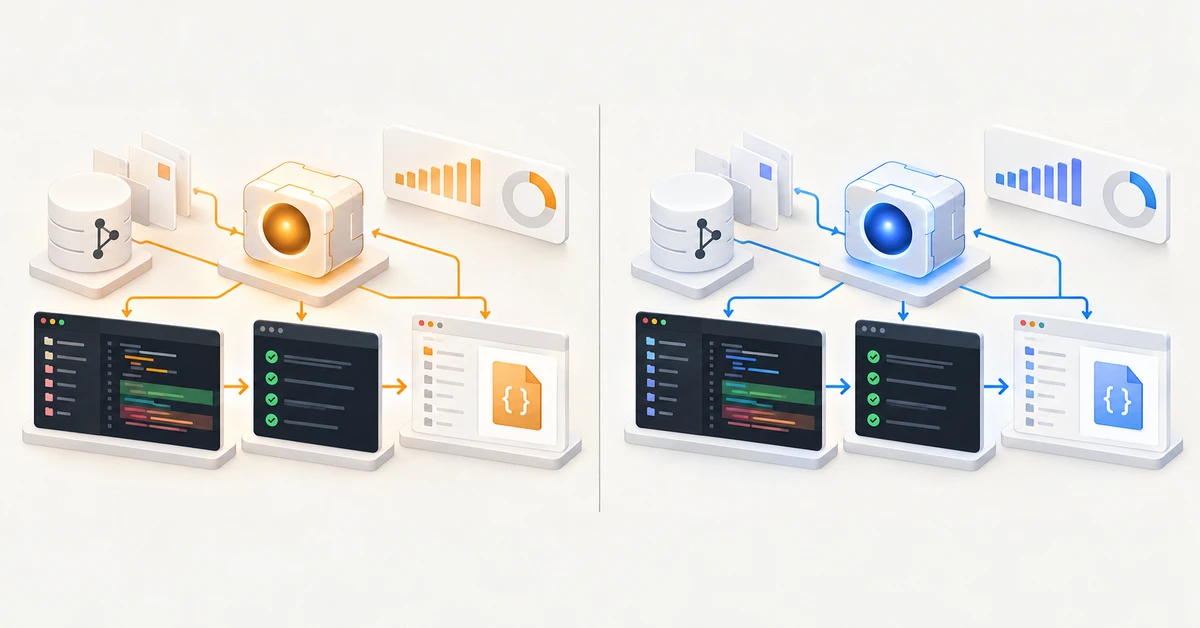
For software engineering, test more than whether a model can produce a plausible first patch. Measure how accurately it understands an unfamiliar codebase, follows repository conventions, runs tests, diagnoses failures, and updates the patch after feedback. For computer-use agents, evaluate page recognition, navigation accuracy, recovery from unexpected screens, and whether the system pauses before consequential actions.
- Coding agents: compare issue resolution, test repair, documentation, and review comments.
- Browser agents: compare navigation, form completion, error recovery, and approval handling.
- Business agents: compare structured extraction, CRM updates, routing, and audit-log quality.
Run each scenario with identical tools, permissions, instructions, and success criteria. Record cost per completed task, not merely cost per request. Include human review time, failed runs, retries, rollback events, and the value of work that still needs correction. This broader measurement often reveals whether a small quality difference outweighs a token-price advantage.
For an Indian SME or startup, a staged pilot can begin with read-only knowledge retrieval or internal code assistance before expanding to customer records, payments, or production deployments. Teams needing help designing that evaluation can combine application development services with an approval-based agent architecture.
Estimate total cost before choosing a model
Token prices are only the starting point in a Claude Fable 5.1 vs GPT-6 Astra comparison. Fable 5.1 lists cache reads at $0.25 per million tokens, while Astra lists cached input at $1 per million tokens. That difference can matter when an agent repeatedly reuses repository instructions, product documentation, tool schemas, or customer-service policies. It matters less when conversations are short, context changes frequently, or cache hits are inconsistent.
Build a cost model from real request traces rather than headline rates. Separate input, cached input, output, retries, background planning, and tool-result tokens. Then calculate the cost of one successful business outcome, such as a repaired pull request, a qualified lead, or a completed support workflow. Anthropicâs estimated workload savings and OpenAIâs listed tiers are useful reference points, but neither replaces measurement on your own traffic.
Design the rollout around risk
A sensible pilot starts with tasks that are useful but reversible. Code search, document classification, draft generation, test suggestions, and read-only analytics allow teams to compare quality without giving an agent authority over sensitive systems. Once reliability is established, add narrowly scoped write actions behind approvals, validation rules, and clear rollback procedures.
For web applications, the model choice should also fit the surrounding architecture. A well-designed API layer can enforce schemas, redact sensitive fields, record tool calls, and route selected tasks to different models. A CMS, CRM, or internal dashboard can then expose agent capabilities without allowing unrestricted access to the underlying database. Teams planning such integrations can use Generative AI development services to define the workflow, controls, and evaluation plan.
The practical question is therefore not which model wins every benchmark. It is which model delivers the required success rate, safety posture, latency, and cost for a clearly bounded workflow. Keep both options available during the pilot when switching providers is technically feasible; comparative evidence becomes more valuable as prompts, tools, and business requirements evolve.
Availability, safeguards, and the final choice
Both models are positioned for production-oriented work, but availability does not remove the need for governance. Claude Fable 5.1 is generally available through Claude products, the Claude API, and major cloud marketplaces, while GPT-6 Astra is available through the OpenAI API under its published model ID. Access, quotas, regional support, and account requirements can still vary by platform, so confirm the current provider documentation before committing an architecture.
Computer-use and agent features also require stronger controls than ordinary text generation. Keep credentials outside prompts, restrict tools to the minimum required actions, validate structured outputs, and require human approval for payments, customer messages, production deployments, or irreversible data changes. Logging model decisions, tool calls, failures, and approvals makes incidents easier to investigate and helps teams improve prompts without guessing.
What should teams choose?
- Choose Fable 5.1 for evaluation when repeated context, long-running workflows, or cache economics are central to the workload.
- Choose Astra for evaluation when computer use, software engineering, browsing, or multi-step API workflows match the product requirement.
- Test both when quality, reliability, or safety matters more than a small difference in headline token pricing.
The strongest decision comes from a controlled pilot using real tasks, fixed success criteria, and complete cost accounting. Compare successful outcomes, not isolated benchmark scores; include retries, human review, latency, cache behaviour, and operational safeguards.


Leave a comment