

India’s second T20I against New Zealand turned into a late-chase test after the hosts posted a competitive total at Hagley Oval, Christchurch, on 24 October 2026. The match followed India’s 1-0 series lead and the confirmed absence of Ishan Kishan, who missed the contest through injury. Kumar Kushagra was added as cover before the game.
New Zealand reached 180/5, with Glenn Phillips making 70 and Bevon Jacobs contributing 58. India won the toss and chose to field, leaving its batters to manage a demanding chase under pressure. Post-match score feeds reported India reaching 181/6 in 19.5 overs for a four-wicket victory, although those final figures should be checked against the completed ICC or BCCI scorecard before publication.
| Match detail | Reported position |
|---|---|
| Venue and date | Hagley Oval, Christchurch; 24 October 2026 |
| New Zealand innings | 180/5; Phillips 70, Jacobs 58 |
| India’s chase | Reported 181/6 in 19.5 overs |
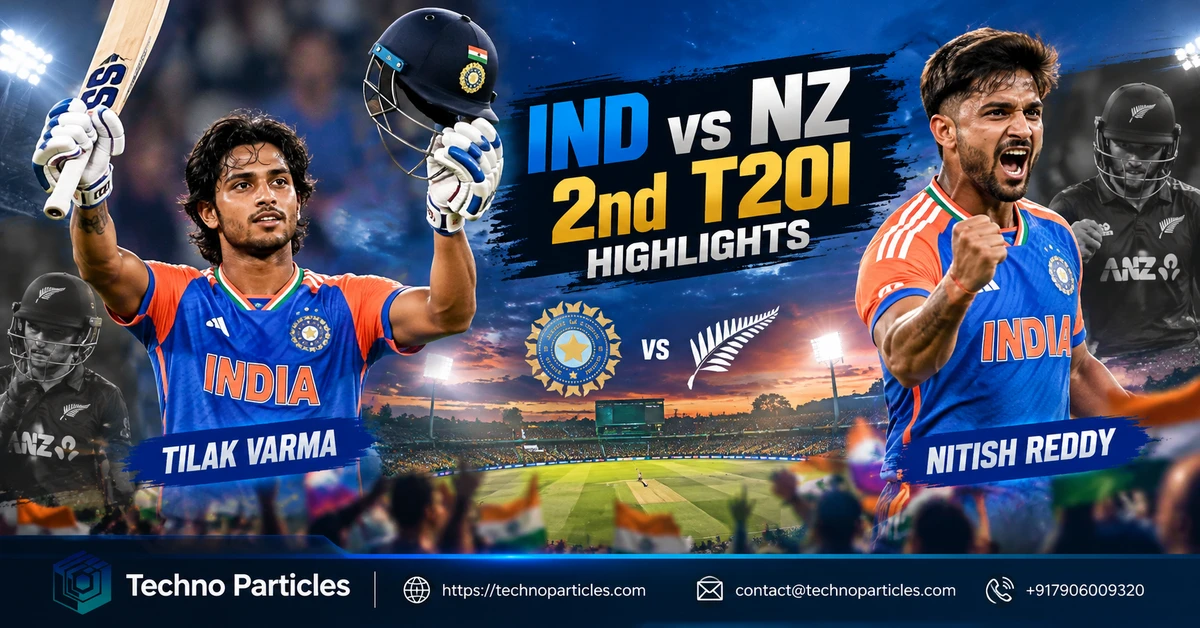
| Key Indian contributions | Tilak Varma 51 off 26; Nitish Reddy 26* off 13 |
| Series context | India entered with a 1-0 lead |
How Tilak Varma changed the chase
Tilak Varma’s reported 51 from 26 balls was the innings’ clearest acceleration point. His contribution mattered because India needed more than steady rotation after New Zealand crossed 180. A rapid middle-order assault can reduce the required rate, force defensive field changes and give the finishing batters a narrower target to control.
Nitish Reddy provides the late push
Nitish Reddy’s reported unbeaten 26 from 13 balls supplied the closing momentum. He also took 1/31 during New Zealand’s innings, giving him influence in both phases. His finishing role reflects the value of a player who can contribute with the ball and still remain composed when a chase reaches its final overs. For broader discussion of digital sports-content workflows, see the software and digital services overview.
Why India’s middle order mattered
The chase was shaped by timing as much as by the final margin. New Zealand’s 180/5 gave India little room for a passive approach, particularly once the required rate began rising during the middle overs. Tilak Varma’s reported strike at 51 from 26 balls changed that equation by converting pressure into boundary-driven momentum. His innings allowed India to approach the closing overs with a target that remained demanding but manageable.
That pattern also highlights the importance of role clarity in T20 cricket. A middle-order batter does not always need to construct a long innings; in this situation, the priority was to absorb pressure briefly and then attack before the fielding side could settle into a defensive pattern. Tilak’s reported contribution filled that acceleration role and kept the chase from depending entirely on the final over.
Nitish Reddy’s all-round value in the decider
Nitish Reddy’s reported unbeaten 26 from 13 balls added another layer to India’s response. His task was different from Tilak’s: preserve the chase’s momentum, select scoring options late and avoid exposing the lower order to unnecessary risk. The reported finish also made his earlier 1/31 more significant, because his contribution extended across both innings rather than being limited to the final batting phase.
For teams building a modern T20 combination, this is the kind of flexibility that can influence selection. A player who can provide useful overs and finish an innings gives the captain more options when a match moves away from the original plan. It can also reduce pressure on specialist batters and create room for a deeper lineup.
What the result means for the series
If the reported four-wicket win is confirmed by the completed scorecard, India will move 2-0 ahead and secure the series with one match remaining. New Zealand, meanwhile, will need a sharper response in the next game, especially in defending totals above 170. Readers tracking match data, publishing workflows or sports-focused digital products can explore this software and digital services overview for related technology context.

The chase was won in the pressure overs
India’s reported four-wicket win was built around managing the demanding middle and late phases of the chase. New Zealand’s 180/5 created a target that required regular scoring, but an aggressive intervention from Tilak Varma prevented the required rate from becoming overwhelming. His reported 51 from 26 balls supplied the decisive burst without requiring every batter to attack from the start.
That distinction matters in a T20 chase. Batters must judge when to rotate the strike, when to target the boundary and when to preserve wickets for the final overs. Tilak’s reported innings appears to have shifted the balance at the point when New Zealand needed control through its field placements and bowling changes. The final result should still be matched with the completed ICC or BCCI scorecard before publication.
Why Nitish Reddy’s role extended beyond finishing
Nitish Reddy’s reported unbeaten 26 from 13 balls gave India a reliable late-innings option, but his contribution began earlier. His 1/31 during New Zealand’s innings meant that he influenced the match in both disciplines. That balance is especially useful when a side is chasing a total near 180, because an all-rounder can add batting depth without being selected solely as a specialist finisher.
In the closing overs, the priority is usually controlled risk. Nitish’s reported unbeaten stay suggests that he helped India retain enough composure to complete the chase in the final over. His role also protected the lineup from relying on one extended innings, with Tilak providing acceleration and Nitish carrying the scoring pressure toward the finish.
Selection pressure before the next match
India’s injury-related change remains part of the wider series story. With Ishan Kishan absent and Kumar Kushagra added as cover, the team’s combination may continue to attract attention as the series develops. The result also gives India greater flexibility in assessing its middle-order balance. For organisations building score-led publishing or reporting workflows, this project consultation service offers relevant technology context.
How India controlled the final phase
The reported chase also underlines the importance of partnerships built around contrasting responsibilities. Tilak Varma supplied the attacking surge, while Nitish Reddy provided late stability and scoring intent. That combination allowed India to keep the asking rate under pressure without requiring every batter to play the same kind of innings. In a short-format match, such role separation can be as important as the individual score.
India’s success appears to have come from converting pressure overs into productive overs. Once the middle order found boundaries, New Zealand had fewer opportunities to dictate the chase through defensive fields. The final delivery of the innings reportedly completed a four-wicket victory, although that result and the associated batting figures should be checked against the completed ICC or BCCI scorecard before publication.
New Zealand’s total was competitive but vulnerable
New Zealand’s 180/5 was built around Glenn Phillips’ reported 70 and Bevon Jacobs’ reported 58. Those innings gave the hosts a strong platform, but the total did not ultimately withstand India’s late acceleration. The contrast offers a useful lesson for T20 teams: a competitive first-innings score must be supported by wickets and disciplined execution when the chase enters its decisive overs.
India’s bowlers also kept the damage contained enough for the target to remain within reach. Nitish Reddy’s reported 1/31 added balance to the attack, while the broader bowling effort prevented New Zealand from turning its platform into a substantially larger total. The margin for error remained narrow, but India maintained a viable route through the chase.
What to watch in the next T20I
The next match will show whether India’s middle-order combination is becoming a repeatable strength or simply reflected one successful chase. Attention will likely remain on Tilak’s position, Nitish’s workload and the replacement balance following Ishan Kishan’s injury absence. New Zealand, meanwhile, must find ways to protect totals during the overs when India’s finishers begin targeting boundaries. For teams developing data-led sports publishing systems, the CMS development service provides relevant technology context.
Why the result changes the series equation
If the reported result is confirmed by the completed scorecard, India will move to a 2-0 series lead and put New Zealand under immediate pressure. The significance is not only the margin of victory. India chased a substantial total after New Zealand’s top contributors, Glenn Phillips and Bevon Jacobs, had established a competitive platform. Recovering from that position suggests the visitors were able to keep their batting plan intact when the required rate increased.
For New Zealand, the challenge is to convert strong starts into totals that remain difficult to chase. That may require more protection during the overs immediately after the main partnership ends, when wickets can prevent India’s middle order from launching a late attack. Fielding quality and bowling changes will also become more important if Tilak Varma continues to find scoring opportunities against defensive plans.
What the scorecard still needs to confirm
The available feeds recorded live or innings-break information when checked, so publication should verify the completed ICC or BCCI scorecard before treating every final figure as definitive. The key checks are India’s exact finishing over, the official margin, Tilak’s confirmed score, Nitish’s unbeaten total and the final dismissal sequence. This distinction matters because live score pages can change during reviews, corrections or the final update after a match ends.
Once confirmed, the figures will provide a clearer basis for evaluating India’s chase efficiency. Analysts can compare the required rate at the start of the innings with the rate during Tilak’s acceleration, then assess how Nitish managed the closing deliveries. Teams building similar data-led reporting workflows may also find useful context in this application development service, particularly when match events need to be captured, checked and published quickly.
Questions ahead of the next contest
The next T20I will test whether India can reproduce this balance and whether New Zealand can defend a total more effectively. Selection decisions, injury updates and the handling of the middle overs will remain central to that assessment.
What the result means for both teams
The reported four-wicket victory would give India a 2-0 series lead, provided the completed ICC or BCCI scorecard confirms the result. More importantly, the chase showed how India can recover when a first-innings total reaches a challenging level. Tilak Varma’s aggressive contribution changed the tempo, while Nitish Reddy’s unbeaten finish reportedly ensured that the required rate remained manageable through the closing overs.
That balance will be important as India manages the uncertainty created by Ishan Kishan’s injury absence. A middle order that combines boundary-hitting with late-innings control can reduce pressure on the opening batters and give the team more options when wickets fall. However, one successful chase is not enough to establish a permanent formula. The next match will reveal whether these roles can be repeated against different bowling plans.
What New Zealand must address next
New Zealand’s reported 180/5 was competitive, especially after Glenn Phillips and Bevon Jacobs produced substantial scores. The immediate concern is how that platform became vulnerable late in the chase.



Leave a comment
Your email stays private. You can see your comment immediately on this browser. Others see it after approval.