

Anthropic has introduced OSS Scanner, an opt-in service designed to help eligible open-source projects find security vulnerabilities without paying for periodic analysis. Announced on October 8, 2026, the service uses Anthropicâs strongest models, including Claude Mythos, to inspect projects that could have a critical impact on infrastructure or user security.
The offer is notable because many open-source maintainers operate with limited security budgets and volunteer time. Instead of waiting for a vulnerability report from researchers or users, qualifying projects can ask Anthropic to scan their code in an isolated environment. The resulting reports may contain a vulnerability explanation, a self-contained reproducer, an introduction bisection showing when the issue appeared, and a candidate patch.
How Anthropic OSS Scanner works
Participation is not automatic. Core maintainers must apply case by case by submitting a pull request to Anthropicâs OSS Scanner GitHub repository. The project configuration includes the repository URL, a maintainer contact, and a Dockerfile that can build an offline-capable scan environment.
Anthropic says the project is built inside an isolated virtual machine and scanned without Internet access. Findings are emailed to maintainers rather than publicly disclosed, giving project teams an opportunity to validate and address issues before wider communication.
That workflow also creates an important responsibility for applicants. The official documentation distinguishes production scanning from local validation: local tools run Docker builds with network access. Maintainers should therefore review the Dockerfile, dependencies, secrets handling, and build behavior before testing the configuration.
Why the service matters for developers and businesses
OSS Scanner could be useful for foundational libraries, frameworks, infrastructure tools, and other projects embedded in websites, applications, and business systems. Teams building or maintaining such software can also review their broader generative AI and automation systems for secure deployment practices.
However, the reports are fully model-generated and receive no human review or triage from Anthropic. False positives, invalid findings, and missed vulnerabilities remain possible, so maintainers should treat each result as a lead requiring independent reproduction, code review, and testing.
What maintainers should check before applying
Anthropic OSS Scanner is most useful when a project can be reproduced reliably in a controlled build. Before submitting a pull request, maintainers should confirm that the Dockerfile installs every required dependency, starts the correct build or test environment, and does not depend on interactive prompts. The scan environment is intended to work offline, so packages or source files that are fetched dynamically during analysis may create avoidable failures.
Maintainers should also separate credentials from the build process. Secrets, deployment tokens, private package credentials, and production data should not be copied into the image or made available to validation commands. A minimal, disposable configuration makes it easier to understand what the scanner can access and reduces the risk of exposing unrelated project material.
AI findings still need a security workflow
A report from Anthropic OSS Scanner should enter the same review process as any other vulnerability lead. The maintainer can first reproduce the behavior using the supplied example, then inspect the affected code and determine whether the reported path is reachable in supported configurations. Security reviewers should test both the proposed fix and nearby failure cases before merging a patch.
Projects should record the scannerâs finding, reproduction status, severity assessment, affected versions, and remediation decision. That documentation helps core teams coordinate private disclosure and communicate accurately with downstream users if the issue is confirmed. It also prevents an AI-generated report from being treated as an automatic verdict.
For organizations that depend on open-source components, the service points to a broader lesson: security checks belong in the software supply chain, not only at the final application stage. Teams can combine maintainer reports with dependency monitoring, code review, testing, and secure application development practices. Anthropic also says qualifying maintainers may receive free Claude Max 20x subscriptions through Claude for OSS, which could support additional research and maintenance work, although eligibility remains subject to its program terms.
Anthropic OSS Scanner: Free AI Security Scans for Open-Source Projects - Techno Particles
How teams should interpret an OSS Scanner report
Anthropic OSS Scanner can reduce the effort needed to investigate difficult code paths, but its output should be treated as security evidence rather than a final judgment. A maintainer should confirm the affected version, reproduce the behavior in a clean environment, and compare the result with the projectâs documented threat model. A finding that appears serious may be unreachable in normal deployments, while a seemingly narrow issue could matter greatly when a library is embedded in an internet-facing service.
The suggested patch also deserves careful review. Maintainers should inspect whether it addresses the underlying weakness, preserves compatibility, and handles malformed or unexpected input beyond the supplied reproducer. Automated tests should cover the vulnerable path and the new defensive behavior. If the report cannot be reproduced, the project should record the attempted environment, dependency versions, and relevant configuration before classifying it as invalid or inconclusive.
Prepare the project for repeatable scanning
A reliable scan begins with a reliable build. Applicants should keep the Dockerfile focused on the supported project workflow and document the commands needed to compile, test, or launch the relevant components. Pinning dependencies where practical can make results easier to compare across scans, while removing unnecessary services reduces noise and limits the scannerâs access to unrelated material.
Teams should also decide in advance who receives security emails, who can verify a report, and how confirmed issues move through private disclosure. Projects maintained by several organizations may need an agreed severity policy and a process for notifying downstream distributors. This preparation is valuable even when a scan produces no actionable finding.
For companies that rely on open-source software, Anthropicâs program highlights the value of combining upstream cooperation with internal controls. Engineering teams can connect maintainer disclosures to dependency inventories, release reviews, and secure website development workflows. That approach helps businesses understand where a vulnerable component is used before deciding whether to patch, upgrade, isolate, or temporarily disable a feature.
Access, privacy, and practical limits
Anthropic OSS Scanner is opt-in, and acceptance is not automatic. Anthropic says eligibility is assessed case by case, with priority for projects whose security could affect infrastructure or users at meaningful scale. Maintainers should therefore provide clear project information and explain why independent vulnerability research would benefit the wider ecosystem.
The submission process also creates operational responsibilities. A project configuration includes the repository URL, maintainer contact information, and a Dockerfile that can build an offline-capable scan environment. Anthropic says the project is built inside an isolated virtual machine and scanned without Internet access. Reports are sent privately by email rather than disclosed publicly, giving maintainers an opportunity to verify and coordinate remediation.
That privacy model does not remove the need for careful preparation. The scanner may inspect source code and build outputs available within the configured environment, so maintainers should remove secrets, private credentials, production data, and unrelated repositories before enrollment. Local validation commands can use Docker with network access, according to the GitHub documentation, which means teams should review those commands and their environment before running them.
Where the service fits in a security program
Anthropic OSS Scanner is best viewed as an additional research channel, not a replacement for conventional security engineering. Static analysis, fuzzing, dependency monitoring, manual review, and tests can expose different classes of weakness. Combining those methods gives maintainers a stronger basis for deciding whether an AI-generated report is valid, exploitable, and important to downstream users.
Businesses that build on open-source libraries can make the same distinction internally. A confirmed upstream issue should be mapped to affected products, services, and deployment versions before teams choose an upgrade or mitigation. Integrating that process with secure project consultation and application planning can help organizations coordinate engineering, security, and release decisions without treating an unverified model output as an emergency by default.
How maintainers can use a report responsibly
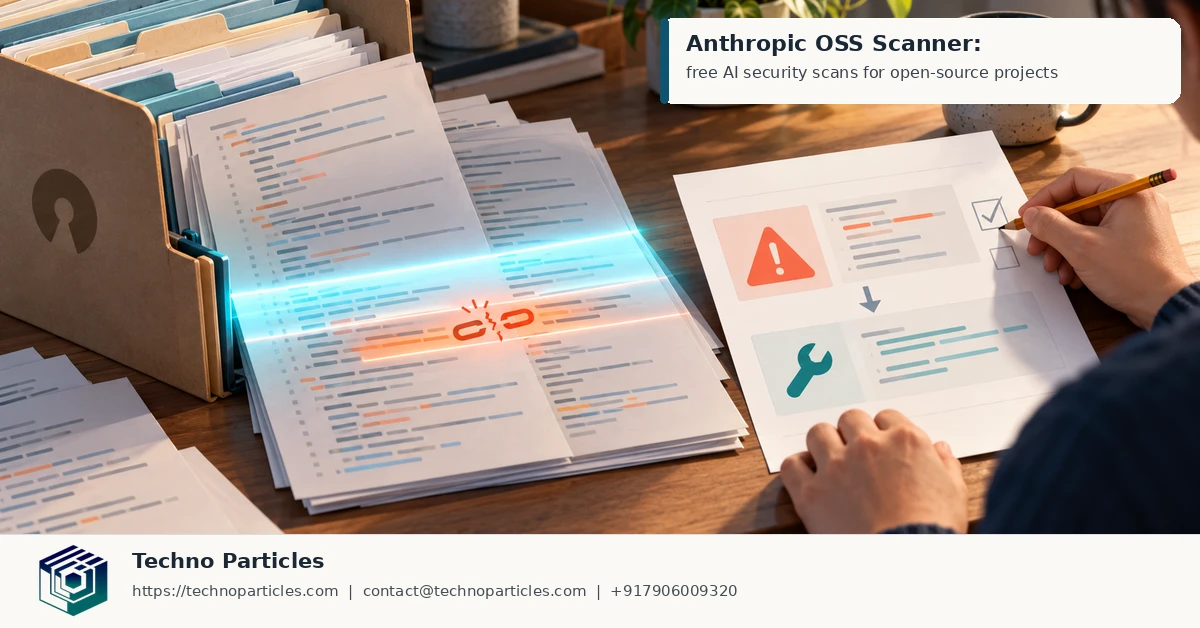
For an accepted project, the most useful outcome is a clear path from model-generated suspicion to maintainer-verified issue. Anthropic says reports may include a reproducer, an explanation of the vulnerable behavior, a likely introduction point, and a candidate patch. Those details can shorten investigation, but each one still needs confirmation against the projectâs source, supported versions, and actual deployment assumptions.
Because the service does not provide human triage, maintainers should expect to spend time separating valid findings from false positives, duplicates, and issues that are technically real but difficult to exploit. Projects should preserve the original report, record the verification steps, and update their security documentation when the result changes the risk assessment.
Turn findings into a repeatable workflow
A practical response can follow a consistent sequence:
- Reproduce the behavior using the reported environment and a clean checkout.
- Identify the first affected release and determine whether later versions already contain a fix.
- Assess exploitability, reachable attack paths, and the users or services exposed.
- Write regression tests before adapting or accepting any suggested patch.
- Coordinate disclosure, release timing, and downstream notification when the issue is confirmed.
For businesses that depend on open-source components, this workflow should connect with dependency inventories and release approvals. Teams building customer-facing products can also include security review in their application development process, so an upstream report is mapped to real product versions instead of being handled as an isolated email.
Anthropicâs separate offer of qualifying free Claude Max 20x subscriptions may give some maintainers additional access to Claude for OSS, but it does not change the central requirement: project owners remain responsible for validating findings and maintaining safe releases. The scanner can expand research capacity while leaving prioritization, disclosure, and remediation decisions with humans.
What Anthropic OSS Scanner means for open-source security
Anthropic OSS Scanner could make advanced vulnerability research more accessible to projects that lack dedicated security teams. Its value will depend less on the novelty of model-generated suggestions than on whether maintainers can reproduce, prioritize, and fix the reported problems safely.
Maintainers should also keep expectations realistic. A candidate patch is a starting point for review, not an automatic release. Teams must check compatibility, test supported configurations, examine possible regressions, and decide whether the issue deserves coordinated disclosure. Projects with limited resources may benefit most when they treat each report as structured investigative input rather than a final security verdict.
For organizations using open-source software, the announcement is a reminder to understand the dependencies inside customer-facing applications, internal tools, and infrastructure. A private report affecting an upstream library may still require rapid inventory checks, version comparisons, compensating controls, and communication with customers or partners. Security teams should document who owns each decision before a serious finding arrives.
The bottom line for maintainers and users
Anthropic OSS Scanner offers eligible open-source projects a new, opt-in route to model-assisted vulnerability discovery, with reports that may include technical evidence and proposed remediation. Anthropicâs isolated, offline scanning approach and private email reporting are designed to support responsible investigation, while the absence of human triage means maintainers must perform the final analysis.


Leave a comment