
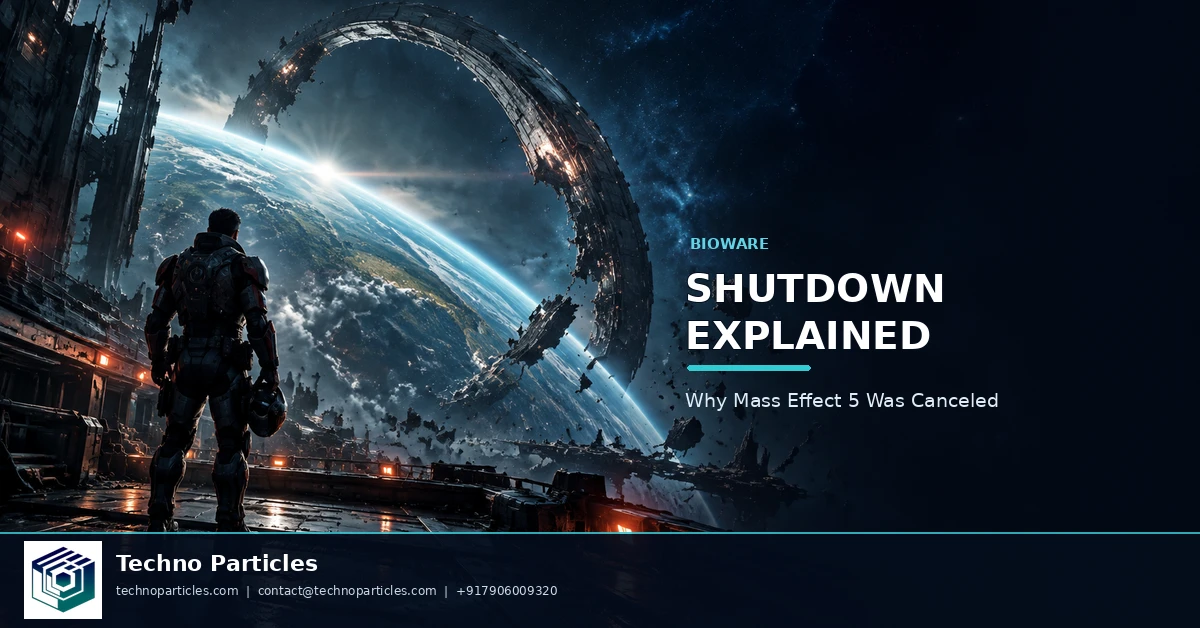
BioWare is closing, and the project widely known as “Mass Effect 5” is ending before it reached a public release. In an official update dated October 21, 2026, BioWare said early development on the next Mass Effect project was ending. Electronic Arts separately confirmed that it would not continue the project as part of a broader decision to concentrate investment on fewer large-scale games.
| Confirmed detail | What it means |
|---|---|
| Studio status | BioWare is closing, including its Edmonton workspace. |
| Project status | Early development on the next Mass Effect has ended. |
| Official title | No final title was announced; “Mass Effect 5” is fan and media shorthand. |
| Release information | No release date, platforms, pricing or gameplay specifications were published. |
Why was Mass Effect 5 canceled?
The verified explanation is a corporate portfolio decision, not proof that one particular game failed commercially or received poor reviews. EA said its strategy is shifting toward fewer major projects, and the next Mass Effect was not included in that plan. The company had previously said that a small BioWare team was working on the project in early development.
That timing matters. On November 7, 2025, BioWare described the next Mass Effect as being in development and said its team was focused exclusively on it. Less than a year later, that development effort was discontinued alongside the studio’s closure. The Associated Press reported that EA’s wider restructuring involved approximately 400 layoffs, including about 50 at BioWare, but the available evidence does not establish a single sales or review-related cause.
What happens to the franchise now?
For now, there is no announced BioWare-led Mass Effect release to follow. EA has not confirmed a transfer, revival or replacement project. Developers and businesses tracking how major digital projects change direction can explore broader project consultation and delivery planning principles, but those general practices cannot predict the franchise’s future.
What the shutdown does—and does not—confirm
The announcement confirms that development stopped during an early stage, before BioWare or EA published a final title, release window, platform list, pricing plan or gameplay demonstration. That distinction is important because “Mass Effect 5” describes an expected sequel in public discussion, not a formally announced product name. There is also no verified evidence that the project had reached a stage where a public build, launch campaign or commercial forecast could be assessed.
It would therefore be inaccurate to describe the cancellation as a confirmed response to weak sales, poor reviews or a specific creative failure. EA’s stated reason was portfolio prioritisation: the publisher plans to focus investment on fewer large-scale projects. The available announcements do not identify a particular feature, development milestone or business metric that caused the Mass Effect project to end.
What this means for players and developers
Players should treat older rumours, concept discussions and speculative release windows as obsolete unless EA issues a new official announcement. The next Mass Effect has no confirmed release date, and no BioWare-led production is currently announced to replace it. A future revival, transfer to another studio or redesigned project remains possible in theory, but none of those outcomes has been confirmed.
For developers, the case illustrates how an early-stage project can be affected by a parent company’s investment strategy even when the project itself has not been publicly evaluated. Teams working on large digital products typically need clear scope controls, milestone reviews, risk assessments and communication plans as priorities change. Organisations reviewing those decisions can use project consultation and delivery planning resources to structure requirements, feasibility checks and rollout decisions, although general planning guidance cannot reveal EA’s internal criteria.
Why the next update matters
The most meaningful future signal would be a direct statement from EA about franchise ownership, development responsibility or a new Mass Effect project. Until then, the confirmed story is limited to BioWare’s closure and the end of early development on the project commonly called Mass Effect 5.
What remains unknown about the canceled project
The shutdown leaves major questions unanswered because the project ended before EA or BioWare publicly described its design in detail. There is no verified information about the setting, characters, combat system, engine, multiplayer plans or relationship to the original trilogy. Any artwork, casting reports or supposed plot details circulating online should therefore be treated as speculation unless they are supported by a future official statement.
The same caution applies to the project’s internal progress. BioWare confirmed early development, but neither company published a production schedule, staffing plan, budget, playable demonstration or milestone report. The phrase “canceled” accurately describes the decision to stop the work, while “unfinished sequel” is a safer description than assuming how much of the game had already been built.
How to interpret the wider restructuring
EA’s announcement places the closure within a broader investment strategy. Concentrating resources on fewer large-scale projects can reduce the number of active productions, simplify portfolio management and direct staff toward titles the publisher considers strategically important. It can also end projects whose public visibility is high but whose internal plans remain too early to evaluate from the outside.
That distinction matters for reporting. The available announcements connect the Mass Effect project’s cancellation to EA’s portfolio priorities and BioWare’s closure. They do not prove that the decision followed a particular review score, sales result, technical failure or fan reaction. Readers assessing new claims should separate those confirmed facts from interpretations based on rumours or comparisons with earlier games.
What studios can learn from the decision
For teams managing large software or entertainment projects, the episode highlights the importance of documenting assumptions before development expands. Clear approval gates, dependency tracking, resource forecasts and contingency plans can help organisations understand the consequences when investment priorities change. Businesses applying similar discipline to digital products can review project consultation and delivery planning practices for requirements, feasibility and rollout decisions.
How to read future Mass Effect updates
Future reports should be evaluated against a small set of verifiable questions. First, has EA announced that another studio or internal team is responsible for a new Mass Effect project? Second, does the announcement describe active development, or merely confirm that the franchise remains part of EA’s catalogue? Third, are there concrete details about scope, platforms, timing or leadership? Without those signals, a rumoured revival should not be presented as a replacement for the canceled project.
The wording used by the companies will also matter. “Mass Effect 5” is a convenient fan and media label, but EA and BioWare did not publish it as the project’s final title. A later announcement could use a different name, change the setting or introduce a substantially different direction. Until that happens, earlier speculation cannot establish what the canceled team had planned or what a future developer might build.
Why early development creates uncertainty
Projects described as being in early development can contain important creative work without having a stable production plan. Teams may be testing concepts, defining technology, estimating staffing needs or reviewing multiple design options. Those activities can inform a later game, but they do not guarantee that the work will transfer intact to another team.
For organisations managing comparable digital products, the practical lesson is to keep product assumptions, ownership decisions and delivery risks visible throughout the lifecycle. A structured review can identify which requirements are essential, which dependencies are fragile and which decisions should wait for stronger evidence. Teams can explore project consultation and delivery planning when they need support organising those questions.
The confirmed position today
Based on the official statements available, BioWare is closing, its Edmonton workspace is being shut down, and early development on the next Mass Effect project has ended. No new BioWare-led release, successor studio or franchise transfer has been announced. That is the firm boundary between the confirmed news and the possibilities that remain open.
What could happen to the franchise next?
EA has not announced a replacement studio, a transferred production team or a new schedule for Mass Effect. That leaves several possibilities open, including a later revival, a redesigned project or a decision to keep the series inactive for an extended period. None of those outcomes should be presented as confirmed. The canceled project’s early-development status also means there is no public evidence that its concepts, technology or staff can simply be carried into another production.
A future announcement would need to establish who owns development responsibility and whether the project is continuing, restarting or being reimagined. It would also need to clarify whether “Mass Effect 5” remains an appropriate label. Until EA provides those details, the familiar name describes a canceled development effort rather than a confirmed product.
What this means for players and developers
For players, the immediate impact is straightforward: there is no announced BioWare-led Mass Effect release to anticipate from this project. Existing games remain separate products, and their availability does not indicate that a sequel is still in production. Rumours about characters, settings or release windows should therefore be treated as unverified unless they come from EA or a formally identified development team.
For developers and businesses, the story illustrates how quickly portfolio decisions can change the direction of a large digital project. Teams planning comparable work can reduce uncertainty by documenting ownership, requirements, delivery milestones and rollback options early. A structured project consultation and delivery planning process can help make those decisions visible before major resources are committed.
A useful standard for future reports
The most reliable updates will distinguish between an official announcement, a report about staffing and a prediction based on franchise interest. Until a new developer, scope or timetable is confirmed, the defensible description remains that EA ended early development on the next Mass Effect while closing BioWare.
What the BioWare shutdown means for Mass Effect
The BioWare shutdown does not confirm that the Mass Effect franchise is permanently over. It confirms something narrower and more important: EA ended early development on the next Mass Effect project while closing BioWare and its Edmonton workspace. No replacement developer, revived production plan or release schedule has been announced.
That distinction matters because “Mass Effect 5” was never the project’s confirmed final title. It is a widely used fan and media label for the next Mass Effect game. EA and BioWare did not publish final details about its story, platforms, price, launch date or technical design. As a result, reports describing specific characters, settings or gameplay features should not be treated as evidence of what will happen next.
Why the cancellation should be understood carefully
EA’s explanation was a portfolio strategy decision: the company said it would concentrate investment on fewer large-scale projects. The available evidence does not establish that one game’s sales, reviews or a single production problem caused the cancellation. Associated Press reporting about wider restructuring and layoffs provides context, but it does not change the official position that early development was discontinued as part of the broader business decision.



Leave a comment
Your email stays private. You can see your comment immediately on this browser. Others see it after approval.