
Anthropic’s Claude Opus 5.5 release introduces the first model in its Claude 5.5 family, with a focus on long-running coding tasks, AI agents, and practical knowledge work. Announced on September 22, 2026, the model is positioned as a more efficient successor to Opus 5 while retaining the high-end reasoning needed for complex software projects.
Anthropic says Claude Opus 5.5 matches Claude Fable 5.1 on most work while costing 40% less to run than Opus 5. Its official pricing is $4 per million input tokens and $20 per million output tokens. The model also provides a 1-million-token context window and can generate up to 128,000 output tokens, giving development teams more room to analyze large repositories, specifications, and test results in one workflow.
What the Claude Opus 5.5 release changes for developers
The model supports adaptive thinking and effort controls, allowing applications to balance response quality, latency, and cost. Developers can also use prompt caching, batch processing, vision, PDF and Files APIs, and server- or client-side tools. These capabilities make it suitable for tasks such as reviewing architecture documents, extracting requirements from PDFs, inspecting screenshots, and coordinating multi-step implementation work.
Computer use is another important part of the release. Through the newer computer_toolset_20260801, Claude can interact with supported desktop-style environments through the Claude API and Google Cloud. Anthropic also reports improvements in agentic coding, code review, communication, and resistance to prompt injection. Those benchmark and tester results are company-reported, so teams should validate them against their own repositories and security requirements.
For businesses planning custom AI workflows, the release is especially relevant to application development and automation projects. However, integrators should review the updated API behavior before migrating: thinking is always enabled, forced tool-use behavior has changed, thinking blocks are conversation-bound, and older computer-use tooling may be rejected on some platforms.
How teams can use Claude Opus 5.5 in production
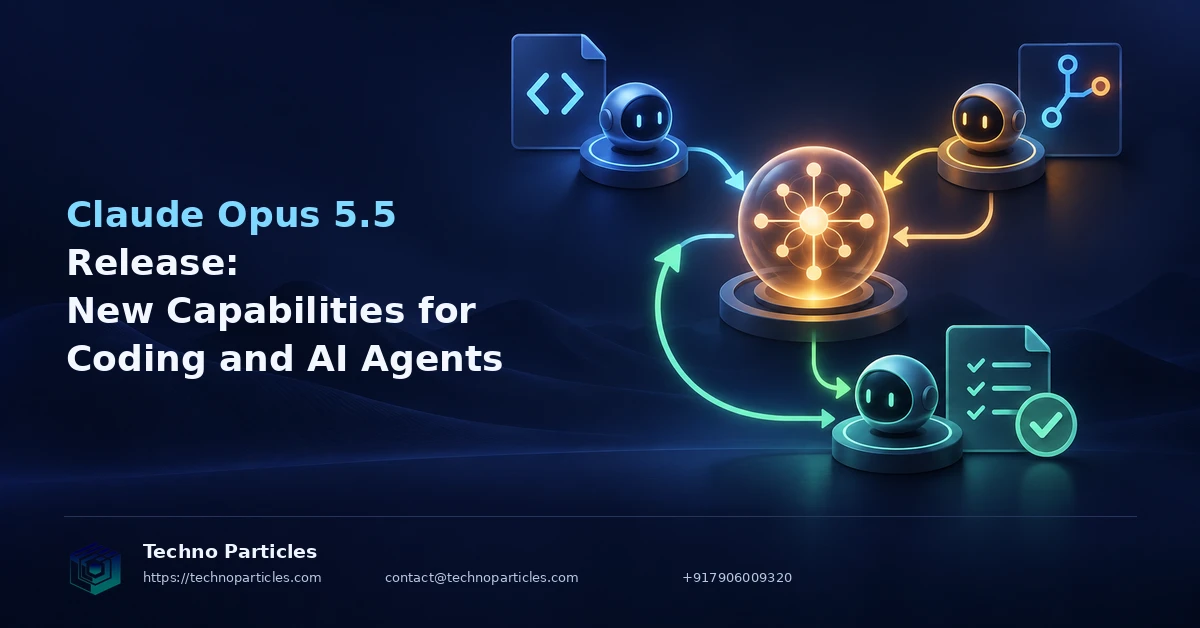
The practical value of the Claude Opus 5.5 release depends on how carefully developers define the model’s role. Instead of granting an agent unrestricted access, teams can assign separate tools for repository search, testing, documentation, issue tracking, and deployment approvals. This creates an auditable workflow in which Claude proposes changes, runs permitted checks, and requests human review before sensitive actions.
Useful coding and agent workflows
- Large-repository analysis: The extended context window can help an agent connect source files, architecture notes, test output, and issue descriptions during a single investigation.
- Review and maintenance: Teams can use Claude to identify likely regressions, explain unfamiliar modules, draft tests, and prepare focused pull-request summaries. Human reviewers should still verify security-sensitive changes and dependency updates.
- Document-driven automation: Vision, PDF support, and the Files APIs allow workflows to turn specifications, screenshots, forms, and reports into structured tasks for downstream systems.
- Desktop task execution: Computer use may support repetitive interface operations in controlled environments, but access should be limited with sandboxing, allowlists, and confirmation steps.
Availability and migration considerations
Anthropic lists Claude Opus 5.5 across the Claude API, Amazon Bedrock, Google Cloud, Microsoft Foundry, and Claude Platform on AWS. GitHub also announced Copilot availability on September 22, with rollout depending on eligible plans. Access and feature behavior can therefore vary by provider, account, region, and integration layer.
Before moving an existing agent to the new model, engineering teams should test prompt templates, tool schemas, retry logic, and conversation state. Thinking is always enabled, forced tool-use behavior has changed, and thinking blocks remain tied to the conversation. The older computer-use tool may also be rejected on some platforms. A staged migration with representative coding tasks and adversarial prompts can expose these differences before they affect production users. Teams building this kind of workflow may benefit from a structured AI project consultation process covering architecture, permissions, testing, and operational monitoring.
What organizations should evaluate before adoption
The Claude Opus 5.5 release offers useful building blocks, but its value depends on the surrounding system. A coding agent should receive only the repository areas, commands, and credentials required for its assigned task. Read-only analysis can usually be separated from actions such as editing files, opening pull requests, changing infrastructure, or sending messages. Approval gates are particularly important when an agent can use computer controls or interact with production-connected tools.
Build a measurable pilot
Start with a limited evaluation based on real work rather than a showcase prompt. Select representative issues such as debugging a failing test, updating an API integration, reviewing a pull request, or converting a product document into implementation tasks. Record completion quality, reviewer corrections, latency, token consumption, tool failures, and the frequency of unnecessary actions. Because Anthropic’s benchmark and tester findings are company-reported, internal measurements should guide deployment decisions.
Teams should also test how the model handles incomplete requirements, conflicting documentation, sensitive data, and hostile instructions inside files or web pages. Prompt-injection resistance is an important stated capability, but it should complement layered defenses rather than replace them. Sandboxed execution, secret isolation, network restrictions, audit logs, and explicit confirmation for high-impact actions remain necessary.
Plan the integration around provider differences
Availability through several cloud and development platforms can simplify procurement, but it does not guarantee identical behavior everywhere. Before launch, compare supported tools, regional access, rate limits, billing, logging, data-retention policies, and model-version controls for the chosen provider. Keep prompts and tool definitions versioned so that a behavior change can be traced and rolled back.
For an Indian SME or startup, a focused pilot can connect Claude to an existing business workflow system, customer-support process, or internal knowledge base without attempting a company-wide rollout. The release is most promising when it is treated as a governed software component: useful for accelerating decisions and implementation, but still accountable to human owners, tests, and clear operational boundaries.
Turning Claude Opus 5.5 into a dependable production tool
The Claude Opus 5.5 release is most useful when teams connect its reasoning and tool capabilities to a clearly defined business process. A coding assistant, for example, can inspect an issue, search an approved repository, suggest a patch, run tests, and prepare a review summary. Each stage should have explicit permissions rather than one broad instruction that allows the agent to act everywhere.
Measure the workflow, not just the model
A practical pilot should use representative work: debugging a failing test, updating an API integration, reviewing a pull request, or converting a product specification into implementation tasks. Track completion quality, reviewer corrections, latency, token usage, tool failures, and unnecessary actions. Anthropic’s benchmark and tester findings are company-reported, so internal results should determine whether the model is suitable for a particular team.
Testing should also include incomplete requirements, conflicting documentation, sensitive data, and hostile instructions embedded in files or web pages. Anthropic describes improvements in prompt-injection resistance, but that capability cannot replace sandboxing, secret isolation, network restrictions, audit logs, and human confirmation for high-impact actions.
Account for provider and integration differences
Claude Opus 5.5 is available through several platforms, but access, billing, rate limits, logging, retention policies, regional support, and tool behavior may differ. Before deployment, teams should compare those details for their chosen provider and keep prompts, tool schemas, and model settings under version control. This makes behavior changes easier to investigate and roll back.
For an Indian SME or startup, a focused pilot could connect the model to an internal knowledge base, customer-support queue, or employee management system. A structured implementation can separate read-only analysis from actions such as editing records, sending messages, or changing infrastructure. That governance helps organizations evaluate the model’s real productivity gains while keeping responsibility with human owners.
How the Claude Opus 5.5 release changes agent design
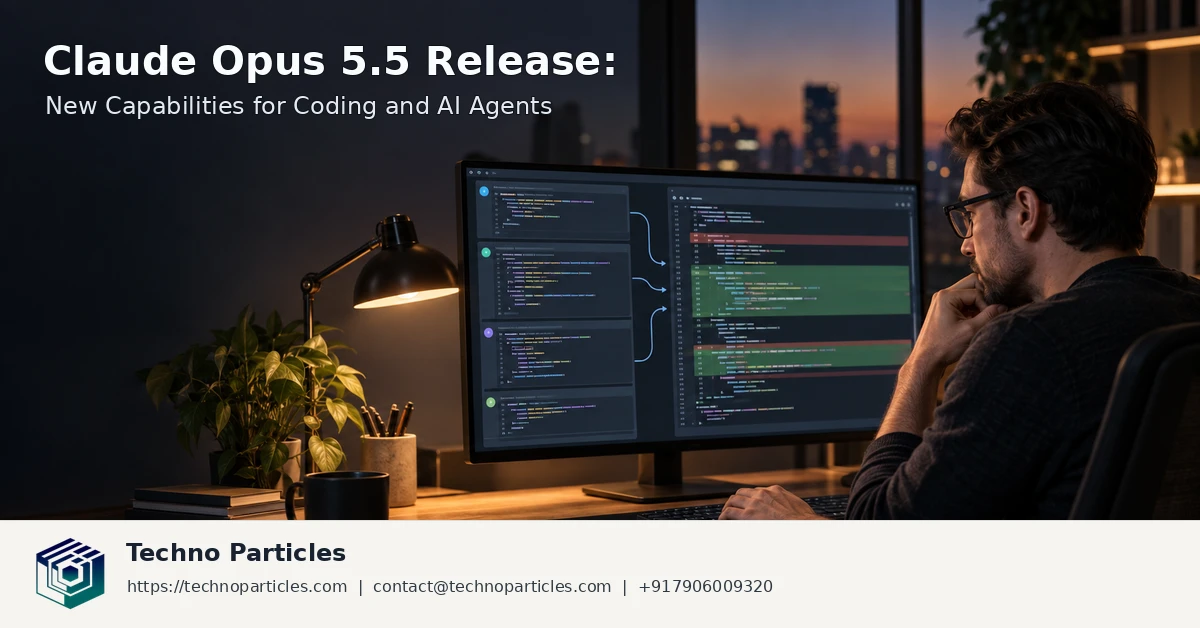
The Claude Opus 5.5 release is significant for teams building agents that must work across long tasks rather than answer one prompt at a time. Anthropic says the model has a 1-million-token context window and can produce up to 128,000 output tokens, giving developers more room for repository context, technical documentation, test results, and multi-step plans. Its adaptive thinking and effort controls can help teams balance reasoning depth against latency and cost.
Use the model’s controls deliberately
Official pricing is listed at $4 per million input tokens and $20 per million output tokens. Anthropic also says Opus 5.5 costs 40% less to run than Opus 5, but teams should calculate their own total cost after including prompt caching, tool calls, retries, storage, and human review. Batch processing may suit non-urgent tasks such as codebase analysis, document classification, or overnight test triage.
The model supports vision, PDF and Files APIs, server- and client-side tools, and computer use through the newer computer_toolset_20260801 on the Claude API and Google Cloud. That combination could support an agent that reads a design document, inspects screenshots, updates an approved code branch, and prepares a review package. Such workflows need narrowly scoped tools, temporary credentials, and confirmation before external actions.
Watch for API behavior changes
Existing integrations may require updates because thinking is always enabled, forced tool-use behavior has changed, and thinking blocks are tied to the conversation. Anthropic also warns that the older computer-use tool is rejected on some platforms. Developers should test message handling, tool schemas, retries, and fallback behavior before switching production traffic.
For businesses planning a governed implementation, an application development workflow can connect the model to approved internal systems while preserving testing, access controls, and audit trails.
What developers should do before adopting it
Teams evaluating the Claude Opus 5.5 release should begin with a limited, measurable workflow rather than replacing an existing development process overnight. Select tasks where the model’s contribution can be reviewed clearly, such as issue investigation, test generation, documentation updates, pull-request summaries, or controlled data extraction. Define what the agent may read, what it may change, and which actions require approval.
Before moving beyond a pilot, verify the chosen provider’s documentation for authentication, rate limits, data handling, regional availability, and supported tools. Re-test integrations after model or API updates, especially where conversations preserve thinking blocks or where computer-use behavior is involved. Keep a fallback model or manual procedure available for outages, unexpected tool calls, and tasks that exceed the system’s confidence or permissions.
Claude Opus 5.5 release: the practical verdict
The Claude Opus 5.5 release gives developers a stronger foundation for long-running coding and AI-agent workflows. Its large context window, extended output capacity, adaptive thinking, effort controls, vision support, and tool integrations could make complex tasks easier to organize across repositories, documents, interfaces, and business systems. The lower official price compared with Opus 5 may also make wider experimentation more practical, although actual savings depend on usage patterns and review costs.
However, this is not a reason to give an agent unrestricted access. Company-reported benchmarks and tester results are useful signals, not guarantees for every codebase or organization.


Leave a comment
Your email stays private. You can see your comment immediately on this browser. Others see it after approval.