
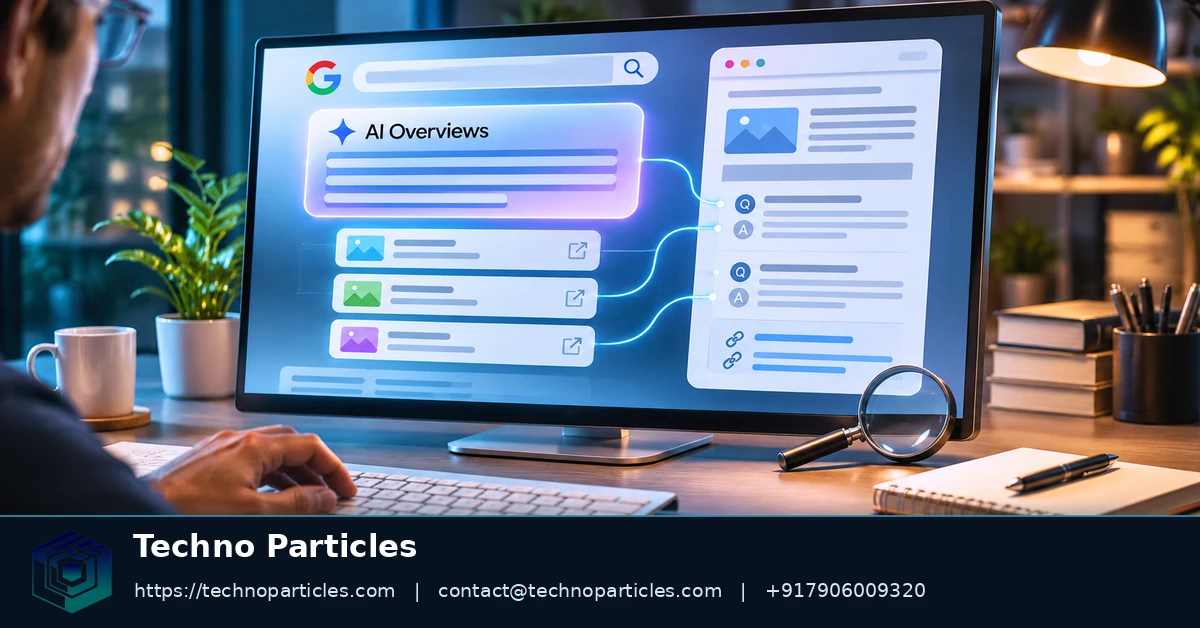
Google’s latest guidance changes the question from “How do I optimize for AI?” to “Does this page help people and remain eligible for Google Search?” If you want to write SEO-friendly blog posts that appear in Google AI Overviews, focus on original value, clear structure, crawlability, and evidence—not a secret AI formula.
| What Google confirms | What it means for writers |
|---|---|
| AI Overviews use Google Search systems and index | Standard SEO fundamentals still matter |
| People-first, unique content is recommended | Add experience, analysis, or information others lack |
| No required word count or special AI schema | Write to satisfy the query, not an artificial length |
| Pages must be indexed and snippet-eligible | Keep important content crawlable and technically sound |
What Google’s latest AI Overviews guidance changed
Google Search Central published its generative-AI optimization resource on May 15, 2026. The guide explains that AI Overviews and AI Mode use Google’s existing Search index and ranking systems, then retrieve and combine information through retrieval-augmented generation and query fan-out. The guidance therefore extends familiar SEO practice rather than replacing it. Google’s announcement highlights unique content, SEO fundamentals, and common misconceptions.
Google updated its detailed guide on July 10, 2026. It recommends valuable, non-commodity content, readable organization, strong technical SEO, good page experience, and relevant images or video. It also rejects several popular shortcuts: there is no preferred page length, no requirement to split writing into tiny chunks, no special schema for AI features, and no Search benefit from llms.txt. The updated optimization guide also stresses that indexing and snippet eligibility are necessary conditions, not guarantees of inclusion.
The broader rollout was announced on May 20, 2025, when Google said AI Overviews were available in more than 200 countries and territories and more than 40 languages. Availability can still vary by query, user, region, language, device, and Google’s systems. Google’s availability announcement provides that rollout context. For implementation support, a technical SEO service can help inspect crawlability and indexing foundations.
How to write SEO-friendly blog posts that appear in Google AI Overviews: eligibility first
Before Google can consider a page for an AI Overview, the page must be accessible to Googlebot, indexed, and eligible to appear as a normal Search snippet. Google’s AI Features and Your Website guidance explains that crawl access and preview settings influence whether content can be used or displayed in AI features. Indexing is therefore the foundation: a perfectly written article cannot contribute if Google cannot access or include it in Search.
Eligibility does not mean inclusion. Google’s updated generative AI optimization guide says that Google does not guarantee crawling, indexing, or serving. AI Overview visibility can vary according to the query, user, region, language, device, and Google’s systems. Treat appearance as an earned result of satisfying a search need, not as a publishing switch that can be turned on.
Build a page Google can understand
Keep the main answer in crawlable HTML, use descriptive headings, and make the page’s purpose clear from its title and introduction. Organize supporting details so both readers and search systems can identify which sections answer which questions. Strong SEO foundations can help uncover blocked resources, indexing problems, weak internal linking, or pages that are difficult to interpret.
Google’s systems may retrieve information from more than one search interaction when responding to a complex request. That makes topical clarity important: each page should have a defined audience and a coherent purpose rather than a collection of loosely related keywords. Write the complete answer users need, then support it with evidence, examples, and relevant links.
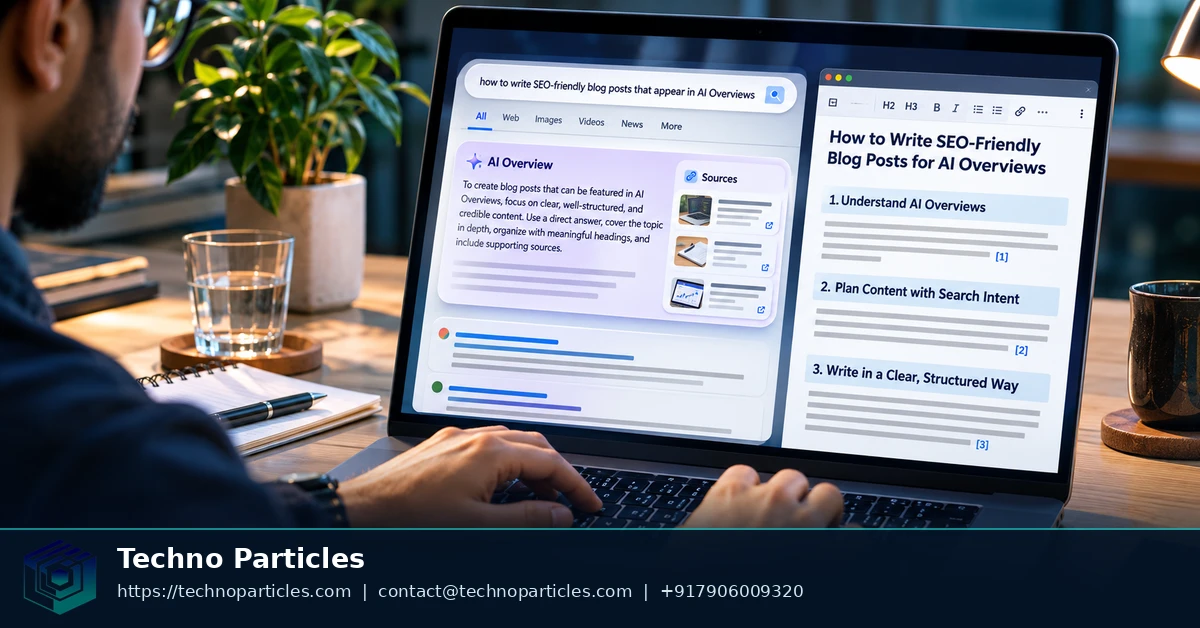
Separate access, indexing, and preview eligibility
These conditions describe different stages. Crawl access lets Googlebot request a page and its important resources. Indexing means Google has processed the page and may use it in Search. Snippet eligibility means the page can appear in ordinary Search results with a preview. AI Overview systems can use eligible Search results, but these stages should be checked separately.
Start with the page’s canonical URL, important links, and rendered content. Confirm that the answer is present in crawlable HTML, not available only after an interaction that search systems may not execute. Google’s AI Features and Your Website documentation points publishers to Googlebot access, preview settings, and URL Inspection when investigating how a page can appear in AI features.
URL Inspection helps verify how Google sees a specific page. It can expose problems that page-level writing cannot solve, such as blocked resources, indexing status, or a mismatch between the published URL and the version Google processes. Google’s SEO Starter Guide also emphasizes descriptive titles, headings, links, and readable organization because these elements clarify a page’s subject for readers and search systems.
Give retrieval systems one clear job
AI Overviews can combine information gathered through query fan-out, where a complex request leads Google to explore related searches. A focused page gives that process a stronger retrieval target: one audience, one central question, and supporting evidence that answers predictable follow-up questions.
Do not turn this into a collection of loosely related phrases. Define the problem in the introduction, answer it directly, and use headings that separate definitions, steps, examples, and limits. When a team cannot identify whether a visibility problem begins with access, indexing, or page purpose, a project consultation can help turn those questions into a documented diagnostic scope.
Turn complex queries into answer paths
One page can support several related questions when its structure follows the reader’s decision path. Start with the main problem. Then answer the definition, required steps, practical example, and important limitation in separate sections.
This structure helps readers scan quickly. It also gives search systems clearer passages to interpret. Use descriptive headings that state the question or task directly. Avoid headings built only from repeated keyword variations. Google’s SEO Starter Guide recommends readable organization, descriptive titles, useful links, and clear headings.
Connect evidence to each important claim
Place evidence beside the statement it supports. A product specification needs documentation. A performance claim needs a measured result. A recommendation needs a reason that matches the reader’s situation. This makes the page more useful when an answer requires information from several related sources.
Separate confirmed facts from interpretation. Write “Google says” for a documented platform behavior. Write “in practice” when explaining your own editorial judgment. This distinction prevents a practical recommendation from sounding like an official ranking rule.
Keep supporting pages technically coherent
Complex topics often need more than one page. Keep the central explanation on one authoritative URL. Link to supporting pages only when they answer a genuinely different question. Use descriptive anchor text so readers understand the destination before clicking.
For example, an article about crawlable HTML may connect to a relevant website development service page when the reader needs implementation context. The link should support the explanation, not replace missing technical detail in the article.
Use one canonical purpose for each page. If a draft mixes SEO advice, product news, and unrelated marketing claims, split the topics or narrow the page. Focus gives readers a clearer answer path and gives search systems a more consistent subject to interpret.

Measure AI Overview visibility with evidence
Google Search Console now provides a Generative AI performance report for examining how a site performs across Google’s generative-AI experiences. Use it as a visibility signal, then connect those observations to analytics and business outcomes.
Track visibility beside clicks and conversions
Record which pages receive generative-AI exposure, which queries or topics matter, and whether visibility changes after a substantial editorial update. Compare those observations with impressions, clicks, engaged sessions, leads, purchases, or other outcomes that match the page’s purpose.
Search visibility alone does not prove business value. A page may help users discover a brand without producing an immediate click. Review assisted conversions, returning visits, branded searches, and qualified enquiries when those measurements are available in the site’s analytics setup.
Reject shortcuts that create weak evidence
Google’s guidance does not require a special AI markup format, fixed page length, artificial content chunks, or an llms.txt file for eligibility. Build a useful page first. Then measure whether its audience, structure, evidence, and technical health support real results.
Do not treat third-party visibility scores as Google’s internal ranking or AI decision data. Such tools can support monitoring, but they cannot guarantee inclusion, citations, rankings, or traffic. For implementation work, a focused SEO service can help connect technical checks with measurement goals.
Review performance after meaningful changes, not after every sentence edit. Keep a record of the page version, change made, date, target audience, and resulting business signal. This turns SEO experimentation into a controlled learning process instead of a search for a fixed formula.
A publishing rule for AI Overview visibility
Use this decision rule: publish a page only when it gives a specific audience a clear answer that competitors cannot easily replace, and when the page is technically eligible for Search.
The first test is usefulness. The draft should solve one defined problem, explain important terms, show evidence, and make its own contribution through experience, analysis, examples, or verified information. Remove paragraphs that exist only to repeat keywords or increase length.
The second test is clarity. Readers should understand the page purpose from its title, introduction, headings, links, and examples. Each section should answer a distinct question. If the page needs several unrelated explanations, split the subjects instead of forcing them into one article.
The third test is access. Confirm that the intended URL can be crawled, indexed, and displayed with the preview controls your publishing policy allows. Fix access or indexing problems before changing wording. A polished article cannot help users if search systems cannot process it.
This rule keeps how to write SEO-friendly blog posts that appear in Google AI Overviews grounded in publishing quality, not a formula. It also prevents teams from treating artificial content length, special AI markup, or repeated keyword variants as substitutes for original value.
Next step: choose one existing article, record its audience, central question, evidence, intended business outcome, and indexable URL, then revise only the weakest part. After publication, compare Search Console visibility with the outcome that matters for that page, such as qualified enquiries, purchases, or engaged visits.
Keep the revision focused. A targeted change creates a clearer test than a full redesign, because the team can connect the change to later visibility and business observations.


Leave a comment
Your email stays private. You can see your comment immediately on this browser. Others see it after approval.