
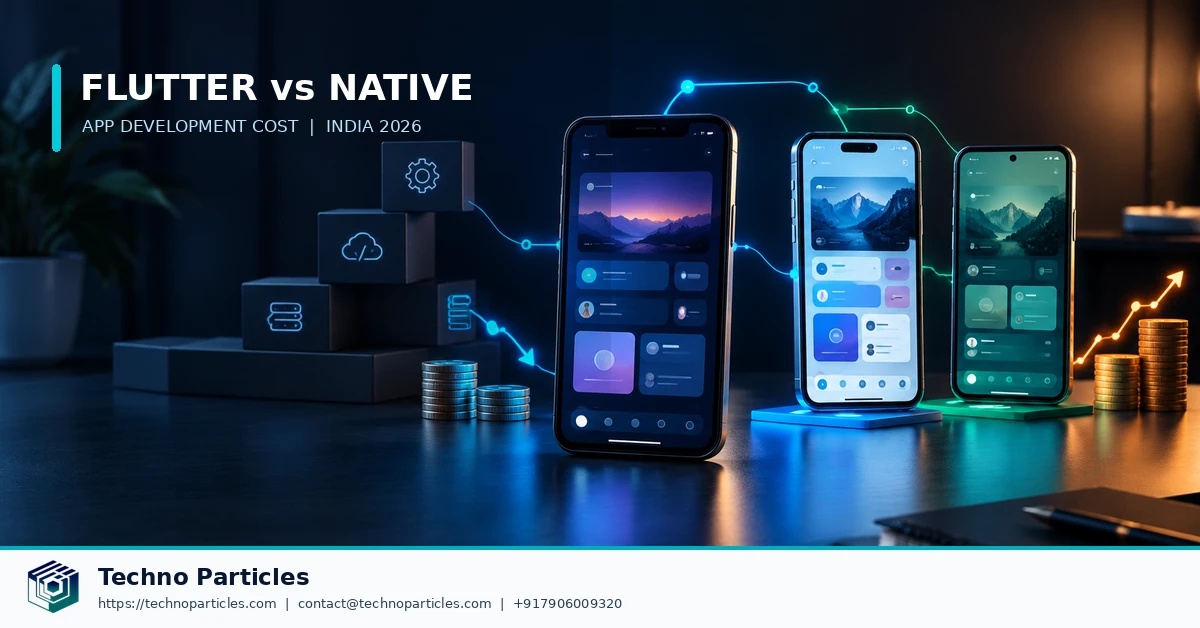
Choosing between Flutter and native development can change how an app is built, tested and maintained, but it does not determine the entire India project quote. In 2026, Flutter remains a practical option for products that need broadly shared Android and iOS functionality. Native development can be the better fit when the product depends heavily on one operating system or requires deep hardware and platform integration.
| Factor | Flutter | Native development |
|---|---|---|
| Code strategy | Shared codebase with platform-specific integrations when required | Separate platform implementations using each platform’s tools |
| Typical cost direction | May reduce duplicated implementation for shared requirements | Can cost more when Android and iOS work must be developed separately |
| Best fit | Business apps, ecommerce, workflows and cross-platform MVPs | Advanced OS features, graphics, background processing, Bluetooth or AR |
| Main uncertainty | Native integrations and complex testing can narrow the cost difference | Higher initial scope may be justified by platform-specific capability |
What the 2026 cost estimates actually mean
Published India pricing guides commonly place simple apps around ₹1.5–4 lakh, mid-complexity products around ₹4–12 lakh, and complex applications at ₹12–40 lakh or more. Separate editorial estimates for Flutter projects place basic MVPs around ₹2–8 lakh and mid-complexity apps around ₹8–20 lakh. These figures are directional vendor estimates, not official industry benchmarks, and should not be treated as guaranteed quotes.
The framework is only one part of the calculation. Backend services, authentication, payments, dashboards, design, security, quality assurance, analytics, store release work and post-launch support can materially affect the final budget. A useful first step is a structured project consultation that defines platforms, user roles, integrations and launch requirements before comparing technologies.
Why Flutter may cost less for shared features
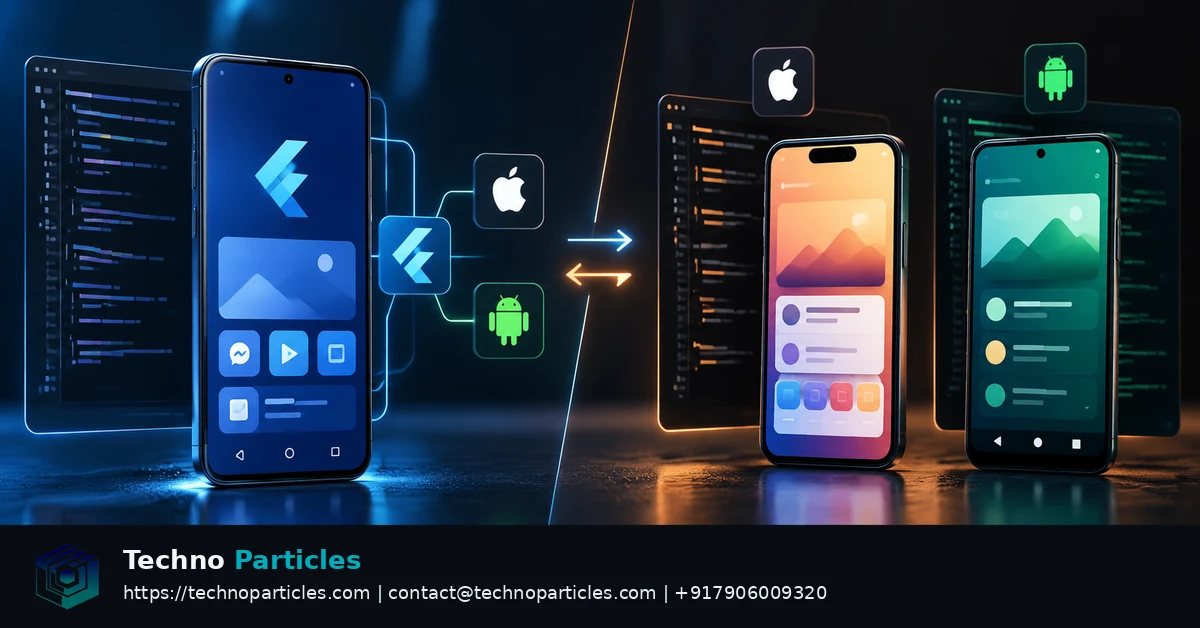
Flutter’s official platform-integration model supports a shared application codebase while allowing plugins and native code where platform differences matter. That can reduce duplicated work for common screens and workflows, although it does not remove platform testing or native integration effort.
Where the cost advantage can disappear
Shared code does not mean identical delivery effort. A Flutter project still needs Android and iOS testing, device-specific layout checks, permission handling, store compliance and review of each plugin used. If the product requires a custom camera workflow, Bluetooth connection, background location, augmented reality, advanced graphics or tightly controlled operating-system behaviour, developers may need native integrations. Those additions can reduce the gap between a Flutter estimate and a native estimate.
Native development can also be more economical over the product’s full life when nearly every important feature is platform-specific. Separate Android and iOS codebases require more implementation and coordination at launch, but they may provide direct access to platform APIs and a clearer path for specialised optimisation. The right comparison is therefore not “one framework versus two,” but the total engineering effort required by the product’s most difficult features.
How to compare Flutter and native quotes
Ask vendors to separate the proposal into discovery, interface design, frontend development, backend work, integrations, testing, deployment and maintenance. The estimate should identify whether Android and iOS are both included, which third-party services are covered, and how many revision cycles are allowed. It should also state whether dashboards, analytics, security reviews, documentation and post-launch fixes are included.
A practical discovery process can expose hidden scope before technology is selected. A project consultation can help map user roles, workflows, integrations and release requirements into a more comparable specification. That makes it easier to request like-for-like Flutter and native proposals instead of comparing one broad estimate with another that omits essential work.
Questions to settle before development begins
- Which features must work offline or in the background?
- Does the app depend on Bluetooth, sensors, payments, camera processing or location?
- Will the same functionality be released on Android and iOS?
- Who will maintain plugins, operating-system updates and security fixes?

Flutter versus native: where the 2026 decision becomes technical
The cost difference becomes easier to judge when the app’s hardest requirement is identified early. A standard catalogue, booking flow, customer portal or internal workflow may benefit from shared Flutter implementation because many screens, forms and business rules are similar across Android and iOS. However, the estimate still needs separate device testing and platform-specific checks before release.
Native development deserves closer consideration when the product depends on specialised operating-system behaviour. Examples include continuous background processing, advanced Bluetooth communication, augmented reality, intensive graphics, unusual camera pipelines or tightly controlled sensor access. In these cases, direct platform APIs may reduce workarounds and make long-term maintenance more predictable, even if the initial build involves separate Android and iOS implementations.
What a reliable India estimate should include
A credible proposal should show more than a framework label and a single total. Ask for assumptions covering the number of platforms, supported devices, offline behaviour, user roles, integrations and expected traffic. The scope should also identify whether the quote includes backend APIs, an administration panel, analytics, crash monitoring, security testing, accessibility checks and store submission support.
- Product scope: screens, workflows, permissions and edge cases.
- Technical scope: APIs, databases, authentication, payments and third-party services.
- Launch scope: device testing, store assets, approvals and release fixes.
- Ongoing scope: operating-system updates, plugin maintenance, monitoring and support.
Teams comparing proposals can use a structured project consultation to turn these assumptions into a shared specification. The result is a more useful Flutter versus native app development cost comparison because each vendor is pricing the same product responsibilities.
Why requirements matter more than the framework label
Flutter can be cost-efficient for genuinely shared product requirements, while native can be the more defensible investment for platform-led experiences. The final India quote depends on the amount of engineering, design, testing and support needed—not simply on whether one technology is selected.
How project scope changes the India cost range
Public 2026 pricing guides suggest that simple mobile apps may fall around ₹1.5 lakh to ₹4 lakh, mid-complexity products around ₹4 lakh to ₹12 lakh, and complex applications from ₹12 lakh to ₹40 lakh or more. These figures are editorial estimates rather than official benchmarks, so they should be treated as planning ranges, not fixed market rates. A separate guide places basic Flutter MVPs near ₹2 lakh to ₹8 lakh and mid-complexity Flutter apps around ₹8 lakh to ₹20 lakh.
The difference between these ranges usually comes from scope. A basic app with a small number of screens, standard authentication and limited backend work is easier to compare across frameworks. A product with multiple user roles, payments, dashboards, real-time data, offline support, moderation tools or complex integrations needs broader design, engineering and testing effort regardless of the chosen technology.
Build a like-for-like framework comparison
For a meaningful Flutter versus native app development cost comparison, request two proposals based on the same product specification. Each should identify whether Android and iOS are included, which devices will be tested, and whether backend APIs, administration tools and analytics are part of the quote. Otherwise, a lower Flutter estimate may simply exclude work that a native proposal has already included.
- Lower-complexity Flutter case: shared forms, dashboards, content, accounts and standard API-driven workflows.
- Native-leaning case: advanced graphics, augmented reality, specialised Bluetooth, demanding background processing or unusual camera and sensor behaviour.
- Both approaches: security, quality assurance, release preparation, documentation, monitoring and post-launch maintenance.
Teams can use an application development service discussion to turn these requirements into a platform-by-platform estimate. The key question is not which framework has the lowest advertised rate, but which option delivers the required experience with manageable implementation and maintenance effort.
How to reduce uncertainty in the 2026 estimate
The most useful next step is to convert the feature list into a delivery plan before comparing Flutter versus native app development cost in India 2026. Separate must-have functionality from later enhancements, then ask each team to price the same release scope. This makes it easier to see whether a lower quote reflects genuine reuse or simply fewer testing, backend and support responsibilities.
Questions to settle before development
- Platform coverage: Will Android and iOS launch together, and which older devices must remain supported?
- Native dependencies: Does the product require Bluetooth, background execution, advanced camera features, AR, specialised sensors or high-performance graphics?
- Service layer: Are authentication, payments, notifications, analytics, databases and administration tools included?
- Quality and operations: Who handles accessibility, security review, crash monitoring, store approvals and operating-system updates?
These answers affect both initial implementation and the cost of maintaining the product after launch. Flutter can keep shared interfaces and business logic closer together, but platform-specific plugins still require evaluation, testing and occasional native code. Native projects may involve more parallel implementation, yet they can offer a clearer path when each operating system needs a deeply customised experience.
Use staged delivery to control risk
For uncertain products, a discovery phase or narrowly scoped MVP can test the most important workflows before the full application is commissioned. The plan should include acceptance criteria, supported devices, data-handling expectations and a method for reviewing technical risks. A structured project consultation can help turn those decisions into comparable estimates and delivery milestones.
Do not treat the framework decision as permanent if the requirements change. A shared-codebase approach may suit the first release, while a later feature could need a native module or a different architecture. Conversely, an initially platform-specific build may reveal reusable components for future expansion. The strongest estimate explains these trade-offs, identifies exclusions and shows how technical choices connect to user experience, release readiness and long-term support.
Final verdict: which option costs less?
There is no universal winner in the Flutter vs native app development cost in India 2026 question. Flutter may offer a more efficient starting point when Android and iOS need substantially similar screens, workflows and business rules. A shared codebase can reduce duplicated implementation, but it does not remove the need for platform testing, plugin evaluation, security work or release support.
Native development can cost more when the product requires separate platform experiences or depends heavily on operating-system capabilities. Advanced graphics, augmented reality, specialised Bluetooth, demanding background processing, camera controls, sensors and deep ecosystem integration can make native implementation the more predictable choice. The higher initial estimate may be justified if it reduces technical compromises or future rework.
What a reliable estimate should include
A trustworthy proposal should explain the framework recommendation and show how the price was calculated. It should identify the planned features, supported devices, platform coverage, backend responsibilities, third-party integrations and testing scope. It should also state whether design, analytics, accessibility, security review, app-store submission, documentation, monitoring and post-launch maintenance are included.
- Choose Flutter when: the product needs a consistent cross-platform interface, rapid validation and limited platform-specific behaviour.
- Choose native when: performance, specialised hardware or deeply customised operating-system interactions are central to the experience.
- Compare both when: the product has uncertain requirements, complex integrations or a long support horizon.


Leave a comment
Your email stays private. You can see your comment immediately on this browser. Others see it after approval.