


OpenAIâs GPT-6.1 Sol is positioned as a more economical way to build computer-use agents without moving too far below the companyâs flagship GPT-6 Astra model. Announced on September 29, 2026, Sol targets coding, browser interaction, and professional workflows where an AI system must interpret screens, choose actions, and complete multi-step tasks. The important headline is not simply that Sol is cheaper; it is that the savings depend on how performance and usage are measured.
Why the âone-seventhâ figure needs context
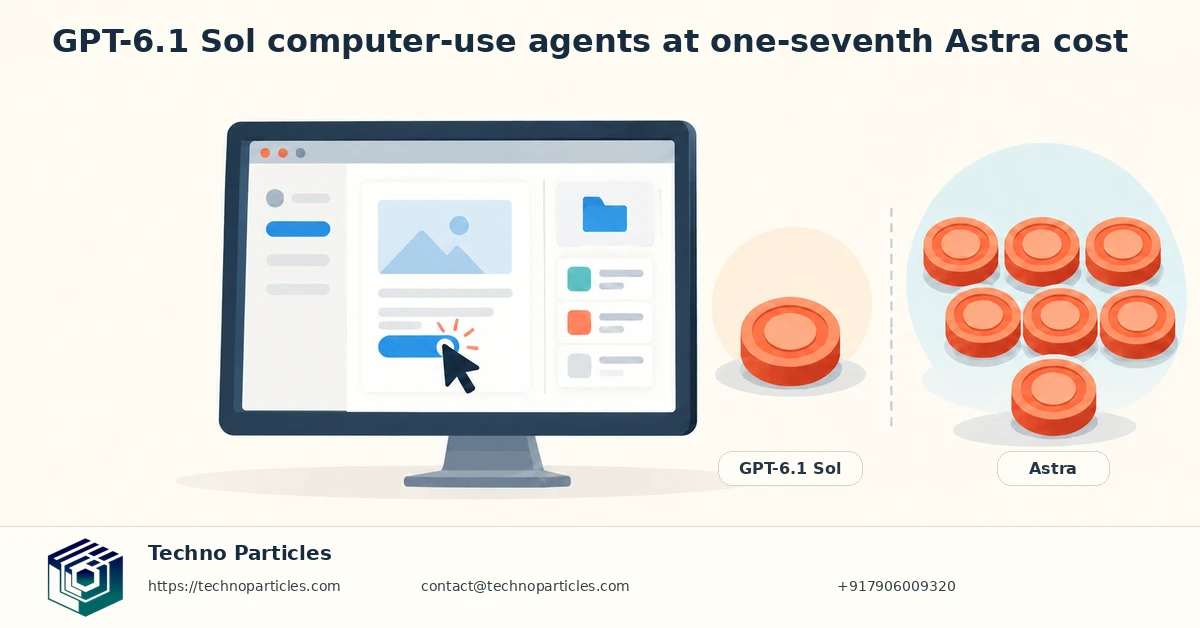
OpenAI reports that Sol comes within 2.1 percentage points of Astra on the offline set of OSWorld 2.0 when both models use maximum reasoning effort. In that evaluation, the company says Sol costs roughly one-seventh as much per completed task. That is a task-level result, not a universal discount on every API request.
For standard token pricing, OpenAI lists Sol at $2 per million input tokens, $0.10 per million cached input tokens, and $10 per million output tokens. Those rates are one-fifth of Astraâs standard input and output token prices, according to the announcement. Actual production costs can differ because prompts, tool calls, task length, and reasoning settings all affect consumption. OpenAI also notes that evaluation results may not predict every real-world deployment.
What Sol can do for working teams
Through the Responses API, GPT-6.1 Sol can support agents that navigate web applications, update CRM records, process documents, and move information between business systems. A sales workflow could classify an inbound lead, find the correct account, and prepare a follow-up task. An operations agent might read invoices, check a dashboard, and flag exceptions for human review.
For organizations planning these systems, the practical challenge is designing reliable permissions, confirmations, and recovery paths around the model. Teams exploring Generative AI and business automation services can start with bounded workflows before allowing an agent to make irreversible changes.
Where Astra still has the edge
The cost advantage does not make GPT-6.1 Sol a replacement for Astra in every situation. OpenAIâs OSWorld result places Sol close to Astra under maximum reasoning effort, but Astra remains the stronger option for the hardest computer-use tasks. That distinction matters when an agent must recover from an unfamiliar interface, interpret ambiguous instructions, or complete a long sequence without supervision.
A sensible deployment can therefore use a tiered model strategy. Sol may handle routine browser navigation, structured data entry, document extraction, and repeatable CRM actions. Astra can be reserved for exceptions, complex planning, or cases where the lower-cost model requests human assistance. This approach also makes testing easier because teams can measure success rates, escalation frequency, latency, and cost on their own workflows instead of relying only on a benchmark.
Availability and safeguards for developers
The API model ID is gpt-6.1-sol, and computer-use access is provided through the Responses API. OpenAI says Sol is also available in ChatGPT Work and Codex for Plus, Pro, Business, Enterprise, and Edu users. It is not yet available in Chat, so organizations should confirm access before planning a user-facing rollout.
Computer-use agents should operate inside carefully limited environments. Give the agent only the accounts and permissions required for its task, separate reading from writing access where possible, and require confirmation before payments, deletions, external messages, or other irreversible actions. Screenshots, action logs, and clear retry limits can help teams investigate failures without allowing an agent to repeat them indefinitely.
For an Indian SME or growing operations team, Solâs most useful role may be as a controlled layer across existing systems rather than a general-purpose replacement for staff. It can connect browser-based tools, CMS workflows, CRM pipelines, and internal documents while people retain approval over sensitive decisions. Teams assessing the right architecture can review application development and automation solutions before moving from a pilot to production.
GPT-6.1 Sol Computer-Use Agents at One-Seventh Astra Cost: What the Numbers Mean - Techno Particles
How teams should test a Sol-based agent
A useful pilot should begin with a narrow workflow and a measurable definition of success. For example, a company could ask GPT-6.1 Sol to collect information from a supplier portal, compare it with records in a CRM, and prepare an update for approval. The test should record whether the agent completed the task, how often it needed help, how many actions it took, and what the run cost. These measurements reveal whether the one-seventh OSWorld task-cost claim translates to the organizationâs own workflow.
Teams should also prepare for interface changes. A computer-use agent depends on what it can see and interact with, so a redesigned button, new login step, or changed table layout can disrupt an otherwise reliable process. Versioned test accounts, monitored browser sessions, and scheduled regression checks can expose these failures before they affect customers or employees.
Designing a safer automation boundary
The strongest early use cases are usually repetitive but reviewable. Sol can draft a record, assemble a report, or classify incoming documents while a person confirms the final action. This keeps the agent useful without giving it unrestricted authority over financial transactions, customer communications, account permissions, or deleted data.
Businesses should define an escalation rule for uncertainty rather than forcing the model to guess. If required information is missing, a website behaves unexpectedly, or two records appear inconsistent, the agent should pause and explain the problem. A human reviewer can then correct the input, approve the next step, or end the run. Teams building these controls may benefit from structured project consultation for AI automation planning before connecting Sol to production systems.
This approach also clarifies when Astra is worth its higher cost. If a workflow frequently encounters unfamiliar screens or requires complex judgment, routing those cases to Astra may improve completion rates. Sol can remain the default for predictable work, creating a practical balance between capability, oversight, and operating expense.
Turning GPT-6.1 Sol into a controlled workflow
The best way to evaluate GPT-6.1 Sol is to map one complete process before connecting it to every business system. Document the starting trigger, the information the agent may read, the actions it can take, and the point where a person must approve the result. This makes the one-seventh OSWorld task-cost comparison useful as a testing hypothesis rather than a promise about every production workflow.
For example, a distributor could use Sol to open incoming order emails, extract product and delivery details, check inventory in a browser-based system, and prepare a draft CRM update. The agent could stop before changing stock records or sending a customer message. A reviewer would see the extracted fields, source documents, and proposed actions before approving the next step.
Measure more than token spend
Token pricing is only one part of the operating cost. Teams should also track browser-session time, tool calls, failed attempts, human review, retries, and the effort required to maintain the workflow when an application changes. A cheaper model may deliver better overall value when it completes routine tasks consistently, but a high escalation rate can erase the apparent savings.
OpenAI cautions that production results can differ according to prompts, tools, and reasoning settings. That is why a pilot should use representative records and realistic permissions. Test successful cases alongside missing data, duplicate entries, expired sessions, slow pages, and misleading screen elements. The goal is to learn when Sol acts confidently, when it should ask for help, and when Astraâs stronger performance justifies the added cost.
What this means for business software
Sol could make existing browser-based systems more useful without requiring every workflow to be rebuilt immediately. A CMS team might automate repetitive content updates, while operations staff could prepare reports from several dashboards. Before deployment, companies should review authentication, audit trails, data retention, and recovery procedures as carefully as the prompt itself. Practical CMS integration and workflow planning can help keep these automations aligned with existing approval structures.
Where GPT-6.1 Sol fits best
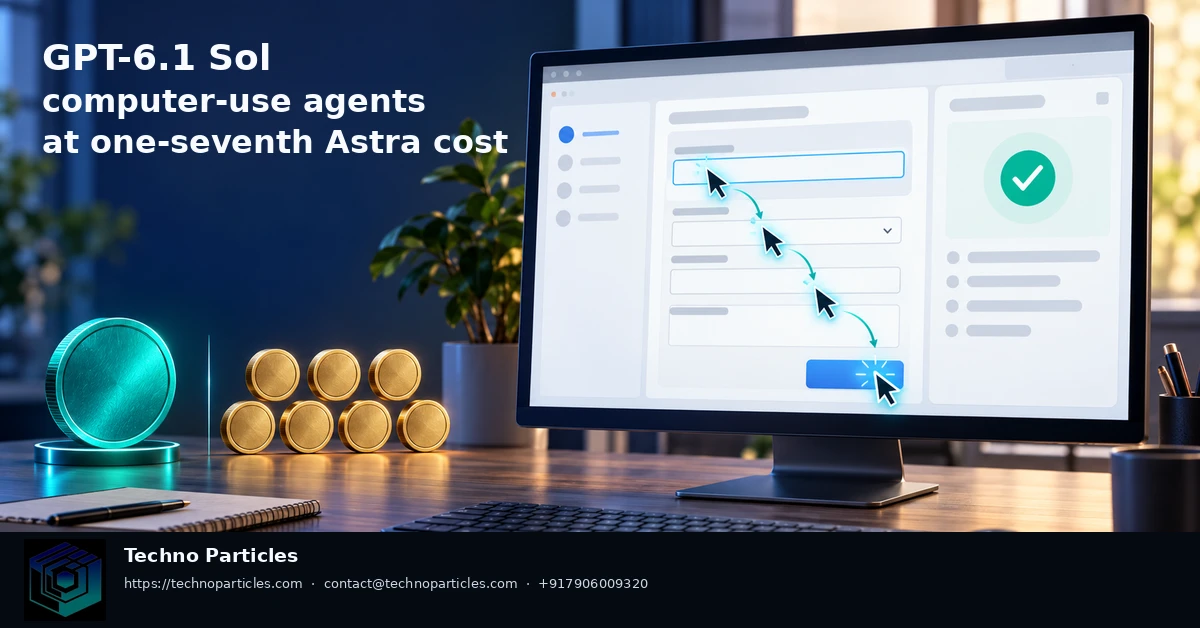
GPT-6.1 Sol is most useful when a business already has a repeatable browser workflow but lacks the time or budget to rebuild every system through custom integrations. It could move information between a supplier portal and a CRM, prepare fields for a CMS entry, or organize documents for review. These tasks still need clear permissions and validation, especially when personal, financial, or commercially sensitive information is involved.
Teams should separate reading, drafting, and approval rights. An agent might be allowed to inspect an order, compare it with internal records, and prepare a proposed update, while a person remains responsible for changing inventory, issuing refunds, or sending a customer-facing message. This boundary makes failures easier to detect and creates an audit trail showing what Sol observed, proposed, and changed.
Questions to answer before deployment
A pilot should identify how the agent handles authentication, timeouts, unexpected pop-ups, duplicate records, and incomplete documents. It should also define what happens when the model cannot confidently identify a button or when the target application changes. A pause-and-escalate path is safer than asking the agent to continue through uncertainty.
Businesses can begin with a sandbox or limited user account, then compare Sol with Astra on the same representative tasks. The comparison should include completion rate, human interventions, retries, latency, and total workflow cost, not token pricing alone. OpenAIâs OSWorld result is a useful reference point, but it does not guarantee identical production performance because prompts, tools, and reasoning settings affect outcomes.
For organizations connecting computer-use agents to existing business systems, generative AI automation planning can help translate a promising demonstration into defined permissions, monitoring, and recovery procedures.
The practical takeaway on GPT-6.1 Sol
GPT-6.1 Sol computer-use agents at one-seventh Astra cost could make browser automation easier to test, but the comparison needs careful interpretation. The one-seventh figure comes from OpenAIâs reported OSWorld 2.0 offline-task estimate at maximum reasoning effort. It is not a universal production price. Standard API token pricing is described as one-fifth of Astraâs input and output rates, while real workflows also incur tool calls, browser time, retries, monitoring, and human review.
That distinction matters for companies planning automation. Sol may be a sensible starting point for structured work such as preparing CRM records, moving information between business portals, sorting documents, or drafting updates in a CMS. These workflows should begin with limited permissions and clear approval points. Reading data and preparing a recommendation can be automated earlier than changing financial records, editing inventory, issuing refunds, or sending an external message.
What businesses should remember
Astra remains the stronger option for the hardest tasks, according to OpenAIâs comparison, so routing should be part of the design. Sol can handle predictable steps, while unusual screens, ambiguous instructions, or repeated failures can trigger human review or escalation to Astra. This model-based fallback is more useful than treating either system as a fully independent employee.
OpenAI says production outcomes may vary with prompts, tools, and reasoning settings.


Leave a comment