
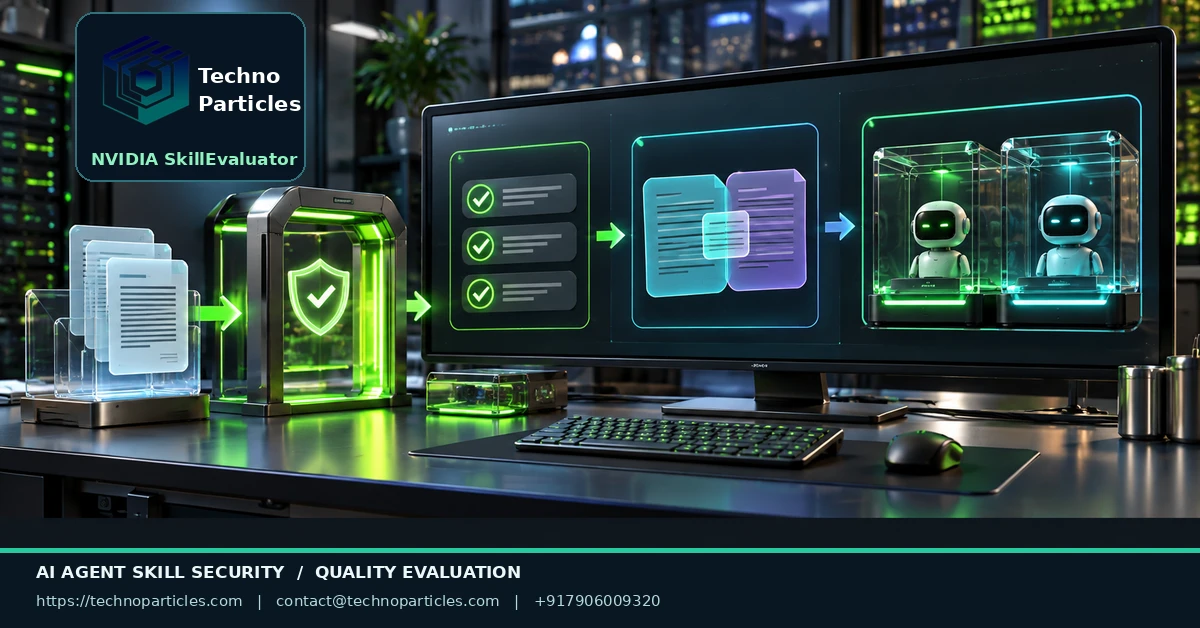
NVIDIA SkillEvaluator gives developers a way to examine AI agent skills before relying on them in real workflows. Its approach combines checks for skill quality and security with a controlled comparison of agent performance with and without a skill. Version 0.9.0 expands the evaluation workflow with features for datasets, budgets and evidence.
| Evaluation area | What SkillEvaluator examines | Practical role |
|---|---|---|
| Tier 1 | Structure, quality and security signals | Identify issues in a skill’s files and configuration |
| Tier 2 | Semantic overlap with other skills | Assess whether a skill is distinct |
| Tier 3 | Agent runs with and without the skill | Compare task outcomes under controlled conditions |
What changed in NVIDIA SkillEvaluator 0.9.0?
The official release page identifies version 0.9.0 as the latest release, dated November 13, 2026. Its additions include richer evaluation datasets, version comparisons, reusable baselines, budget controls, evidence-focused reports and grader auditing. It also introduces optional CI integration for Tier 2 and Tier 3 evaluations.
Those additions build on the three-tier framework NVIDIA described in its August 19, 2026 technical article. The article explains how static checks, embedding-based overlap analysis and sandboxed agent runs contribute different evidence. NVIDIA also reports benchmark results for verified skills; those figures are company-reported, not independently validated.
The release is relevant to teams deciding whether an agent skill helps with a specific task. Version comparison can help them examine changes between iterations, while reusable baselines and evidence-focused reports support closer inspection of a result. For a business planning generative AI development, that distinction matters: a documented task outcome gives the team a more concrete basis for evaluating a proposed workflow.
What the three evaluation tiers actually test
Each tier examines a different question: whether a skill’s files raise quality or security concerns, whether its purpose overlaps with other skills, and whether it changes an agent’s task outcomes. These checks provide complementary evidence; none substitutes for the others.
Tier 1: Inspect the skill before execution
Tier 1 examines the skill’s structure and content. NVIDIA describes checks for frontmatter and schema, quality, prompt injection, data exfiltration, secrets, personal information, licenses, and script linting. The repository also documents a Harness Check for compatibility with agent harnesses. That check requires an installation from GitHub source and is not included in the PyPI 0.9.0 package. See the SkillEvaluator repository for the documented checks and installation paths.
For deeper security inspection, the separate SkillSpector scanner describes checks for risks including privilege escalation, tool misuse, supply-chain issues, excessive agency and MCP tool poisoning. It can produce reports in formats such as JSON, Markdown and SARIF. Full static security coverage can require external scanners.
Tiers 2 and 3: Distinctiveness and task impact
Tier 2 uses embeddings to examine semantic overlap between skills. This helps a team identify skills that may serve similar purposes, a useful signal when deciding how to organize a growing collection. It requires access to an embeddings model, as described in the installation documentation.
Tier 3 uses Harbor to run a controlled comparison: one agent run has the skill installed and another does not. Both arms use the same prompt, model, task inputs and grading criteria, with isolation between them. The resulting Skill Lift measures the difference in outcomes for the evaluated tasks. Defining those tasks can form part of project consultation and workflow analysis, where teams identify the work an agent is expected to support.

How to run a first AI agent skill evaluation
Start with a representative skill and run the keyless quality check on its directory. The official repository documents Python 3.12 through 3.14 support and the following installation and check commands:
pip install skillevaluator
skillevaluator quality-check ./my-skill
The check produces a score out of 100, with a default passing threshold of 70. Use its findings to inspect the skill’s structure and instructions before moving on to a broader evaluation. This first result describes static quality; it does not measure the effect of the skill on an agent’s task outcomes.
Prepare tasks that both comparison arms can attempt
For a live evaluation, build a dataset around outcomes the agent should achieve, rather than requiring it to name or use the skill. For example, a case for a document-processing skill could specify the information the finished document must contain. The same task should be meaningful to an agent without that skill. NVIDIA’s evaluation dataset guide explains how to frame expectations around observable results.
Review generated cases before running them: an expectation that only the skill-equipped agent can satisfy would make the comparison unfair. For teams incorporating agents into application development, representative tasks can reflect the actual workflows the application is intended to support.
Validate and inspect the report
After configuring the required providers and runtime, the documented combined validation command is:
skillevaluator validate ./my-skillFor live runs, prepare the reviewed dataset, model access, a supported agent and a sandbox. Then inspect the report’s evidence and individual failures alongside the aggregate result. The Tier 3 run reference documents execution and reporting options for examining those results.
Availability, access, pricing and usage limits
SkillEvaluator’s entry-level quality check runs without an API key, GPU or Docker. Additional tiers have different access requirements: semantic overlap analysis needs access to an embeddings model, while live evaluation needs a model provider and an environment in which the agent can run. The official installation guide distinguishes the package installation from the separate provider, Docker and scanner setup.
NVIDIA documents free prototyping through NVIDIA Build for eligible NVIDIA Developer Program members, subject to its access terms and rate limits. That access should be assessed alongside the requirements of the model and runtime chosen for an evaluation. Teams planning generative AI development services can use those requirements to identify which provider accounts and environments a proposed workflow will need.
Plan for live-run usage
SkillEvaluator does not publish a fixed price for live evaluation. Provider, model, token and sandbox charges vary, so a team should check the terms of its selected services before committing to a larger run. The Tier 3 run reference estimates trial volume by multiplying the number of evaluation cases by agents, attempts and comparison arms. Grading calls can add usage beyond the agent runs themselves.
The reference documents controls for limiting cases and setting usage budgets. These can help contain a trial, but a run that skips cases is publication-incomplete. Skipping the baseline also removes the Skill Lift comparison, so the resulting report answers a narrower question.
Local mode can avoid managed cloud-sandbox charges, but it does not automatically remove model charges. NVIDIA documents local mode for trusted skills and workspaces because it provides weaker isolation than the sandboxed alternatives.
How to read Skill Lift without overclaiming
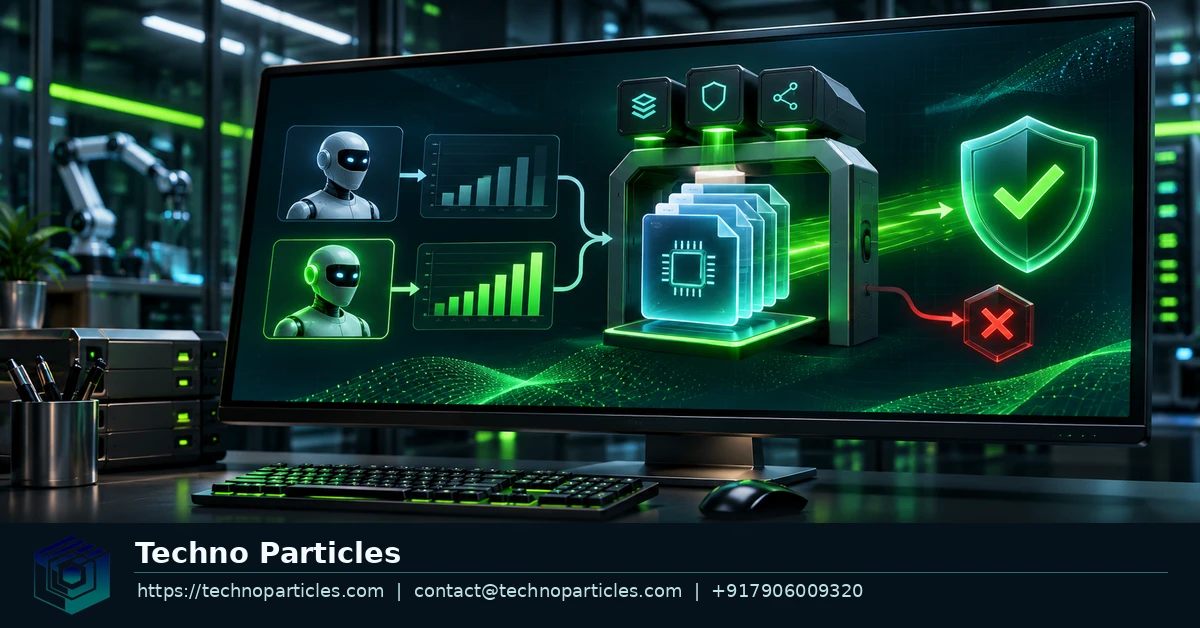
Skill Lift is a comparison between outcomes with and without a skill on the evaluated tasks. A positive result is useful evidence that the skill helped in that experiment; it is not proof that the skill is secure or ready for production. NVIDIA’s explanation of the evaluation pipeline describes Skill Lift as a measure of the difference between the two arms.
Interpret the result in the context of the dataset. A single aggregate can conceal a skill that helps on some tasks and fails on others. Look at which cases passed or failed and whether those cases represent the work the skill is meant to support. The dataset documentation provides context for the cases and expectations behind the score.
Read the evidence alongside the score
Inspect the evidence associated with individual outcomes before treating a change in the aggregate as meaningful. A passing grade is more useful when the report shows what the agent produced and why that result satisfied the expectation. Conversely, a failed case can reveal whether the skill missed an essential outcome or whether the expectation needs clarification.
Also check whether the skill activated when relevant. A favorable outcome on a case where it did not activate deserves a different interpretation from a favorable outcome supported by evidence of the skill’s contribution. That distinction can help teams deciding how an agent fits into a generative AI development workflow.
Keep comparisons comparable
Attempts, agent harness, model, sandbox configuration and evaluation cases all affect what a result represents. Record those choices when comparing reports across versions: a score change alone cannot establish that a skill improved if the surrounding test conditions also changed. Where a report includes pass@k, read it in the context of the attempt policy rather than treating it as interchangeable with a single-attempt result.
Choosing when to use SkillEvaluator
For NVIDIA SkillEvaluator: How to Test AI Agent Skills for Security and Quality, use Tier 1 for each skill change, add Tier 2 when overlap between skills matters, and choose Tier 3 when the decision depends on evidence of changed task outcomes.
Start by running the keyless quality check on one representative skill. Review its findings, then, if live testing is warranted, compare the skill against a baseline using a small, reviewed dataset.


Leave a comment
Your email stays private. You can see your comment immediately on this browser. Others see it after approval.