

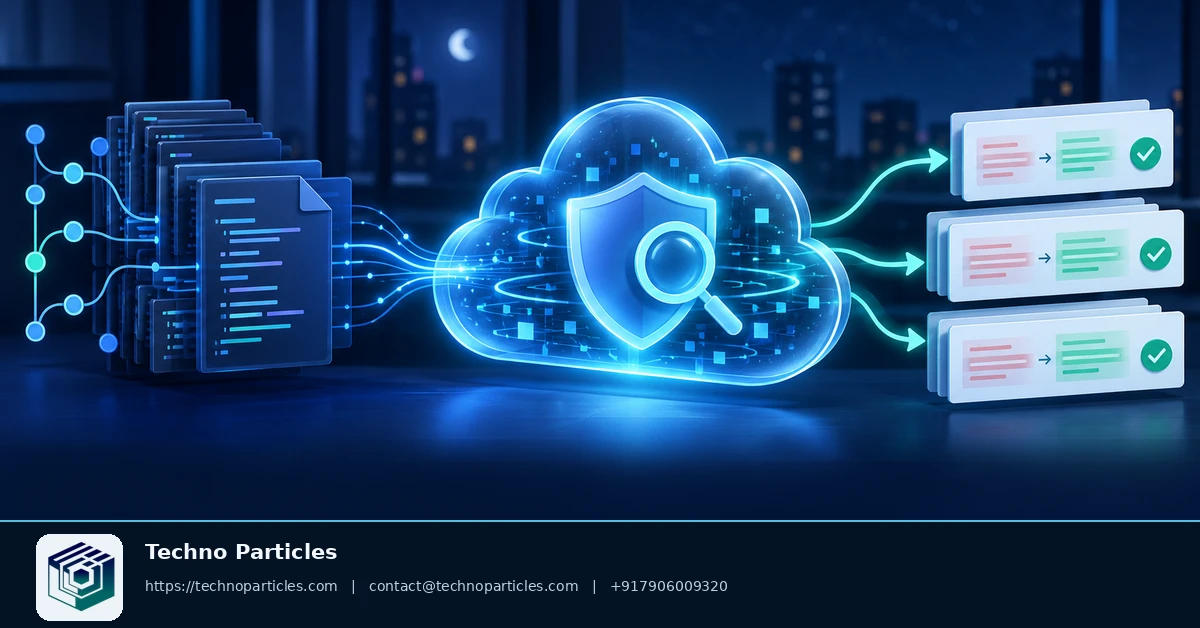
Security reviews often compete with feature work, release deadlines, and the steady arrival of new commits. OpenAI says its Codex Security Cloud is designed to keep investigating a repository when engineers are not actively watching it, while leaving final code decisions with the engineering team.
In a post published by OpenAI Developers on August 21, 2026, the company described Codex Security Cloud as a research preview for connecting to GitHub repositories. Teams can start a one-time repository scan or monitor new commits continuously. The system can build or use a threat model for the codebase, investigate relevant code paths, and test likely vulnerabilities in an isolated environment.
What Codex Security Cloud actually does
The important distinction is between finding and fixing a security issue automatically. When Codex identifies a credible finding, it can prepare a focused patch and, when feasible, add a regression test. An engineer still needs to inspect and approve the proposed change before applying it or opening a pull request. The âwhile youâre awayâ promise therefore describes background investigation, not unsupervised production remediation.
That workflow could help teams turn a growing queue of alerts into reviewable engineering work. Codex Security Cloud can complement deterministic scanners and use signals from formats and systems such as SARIF, GitHub code-scanning, Dependabot, security advisories, and issue trackers. Combining those inputs with code-path investigation may give reviewers more context than a rule match alone, although the quality of every result still depends on the repository and the surrounding evidence.
Why the GitHub workflow matters for software teams
OpenAI notes that larger scans may take several hours, so this is better suited to asynchronous security work than instant feedback on every keystroke. A practical rollout should define which repositories can be connected, who reviews findings, and how proposed patches are tested. Teams planning broader application-security automation can also explore application development services that account for secure workflows from the architecture stage.
How to use the âwhile youâre awayâ security workflow
The strongest use case is not replacing a security team; it is creating a structured queue of evidence for the team to review. Before connecting a repository, engineers should decide whether the scan is a one-time investigation or part of ongoing commit monitoring. They should also identify sensitive repositories, define access boundaries, and confirm how findings will be tracked alongside existing security processes.
Review findings like engineering proposals
A proposed patch should be treated as a starting point for validation. Reviewers need to confirm that the reported code path is reachable, understand whether the issue affects production behavior, and check that the change does not introduce a separate regression. The possible addition of a regression test is useful because it can preserve the intended security behavior after the patch is merged, but it does not remove the need for human review.
This approach is especially relevant when a team receives findings from several sources. A SARIF result, GitHub code-scanning alert, Dependabot notification, advisory, or issue-tracker report can provide the initial signal, while deeper investigation may help connect that signal to surrounding application logic. The result is more actionable when the reviewer can see why the finding matters and what code change is being proposed.
Plan for asynchronous scanning and approval
Because OpenAI says larger scans may take several hours, teams should fit them into planned security reviews, overnight analysis, or pre-release checks rather than expecting instant answers. A clear ownership model matters: one person or group should triage findings, another can review higher-risk patches, and repository owners should decide when a pull request is appropriate.
Businesses building or modernizing software can discuss similar review gates through project consultation services, particularly when application security needs to fit an existing GitHub, testing, and release workflow.
OpenAI Codex Security Cloud Scans GitHub and Prepares Fixes While You're Away - Techno Particles
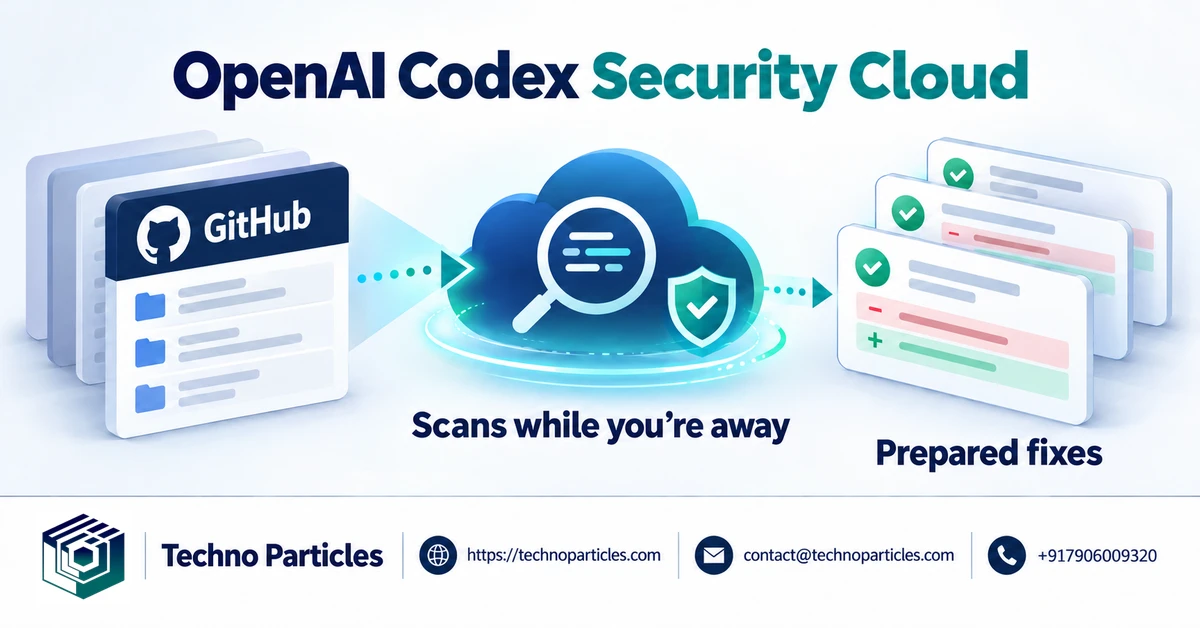
Where the cloud scan needs human judgment
Codex Security Cloud can make security work more organized, but it does not eliminate uncertainty. A credible finding still needs to be checked against the applicationâs deployment model, authentication rules, data flows, and expected user behavior. A vulnerability that appears serious in isolated testing may have a narrower real-world impact, while a small-looking code issue may become important when combined with another weakness.
Teams should also remember that a prepared patch is a proposed engineering change, not a guaranteed solution. Reviewers should inspect the diff, reproduce the issue where practical, run unit and integration tests, and check dependency or configuration changes before approval. For sensitive systems, a staging deployment and targeted security review may be appropriate before a pull request reaches production branches.
Build a repeatable review loop
A useful operating model begins with clear repository permissions and a defined owner for every finding. The owner can classify the issue, confirm its severity, assign a deadline, and record whether the result was fixed, accepted as a risk, or dismissed with evidence. This prevents background scanning from creating another unmanageable alert queue.
It is also worth separating monitoring from release approval. Continuous commit monitoring can surface a new code path or regression, but branch protection, testing requirements, and production deployment controls should remain active. In that arrangement, the system investigates while the team is away, then returns evidence and a possible fix for a deliberate decision.
For organizations that need security-aware software processes across custom applications, application development services can help connect repository practices with testing, access control, and release planning. The central lesson is practical: Codex Security Cloud may reduce investigation time, but accountable engineers still decide what changes the business can safely ship.
What âwhile youâre awayâ really means
The phrase describes asynchronous investigation, not unattended deployment. Codex Security Cloud can continue examining repository evidence after a developer starts a scan, but the resulting finding and patch still enter an engineering review process. That distinction matters for teams deciding how much authority to give a security tool connected to production code.
A sensible workflow can assign low-risk analysis to background runs while reserving approval for people who understand the applicationâs business logic. Reviewers should ask whether the proposed fix addresses the root cause, whether it changes an exposed interface, and whether the regression test covers the failure mode rather than merely increasing coverage. These checks are particularly important for authentication, payment, personal-data, and administrative code.
Combine cloud investigation with existing controls
Cloud scanning is most useful when it adds context to an established application-security program. Deterministic rules can continue catching known patterns, dependency tools can flag vulnerable packages, and code-scanning alerts can provide a consistent record. The Codex workflow can then investigate how a suspected weakness travels through the repository and prepare a focused change for review.
Teams should document which findings are automatically routed for triage, which require a senior security review, and which must be reproduced in a staging environment. They should also retain scan results, approval decisions, test output, and the final merged diff so that future reviewers can understand why a change was accepted.
Measure the workflow before expanding it
During a research-preview rollout, useful measures include time from alert to triage, the percentage of findings that prove actionable, review time for proposed patches, and regressions discovered after merging. These measurements can show whether the tool is reducing investigation effort or simply moving work into a new queue.
Organizations that want to connect secure development practices with testing and release operations can also consider project consultation services. The goal is a controlled feedback loop: scan in the background, investigate with repository context, test the proposed fix, and keep final authority with the engineering team.
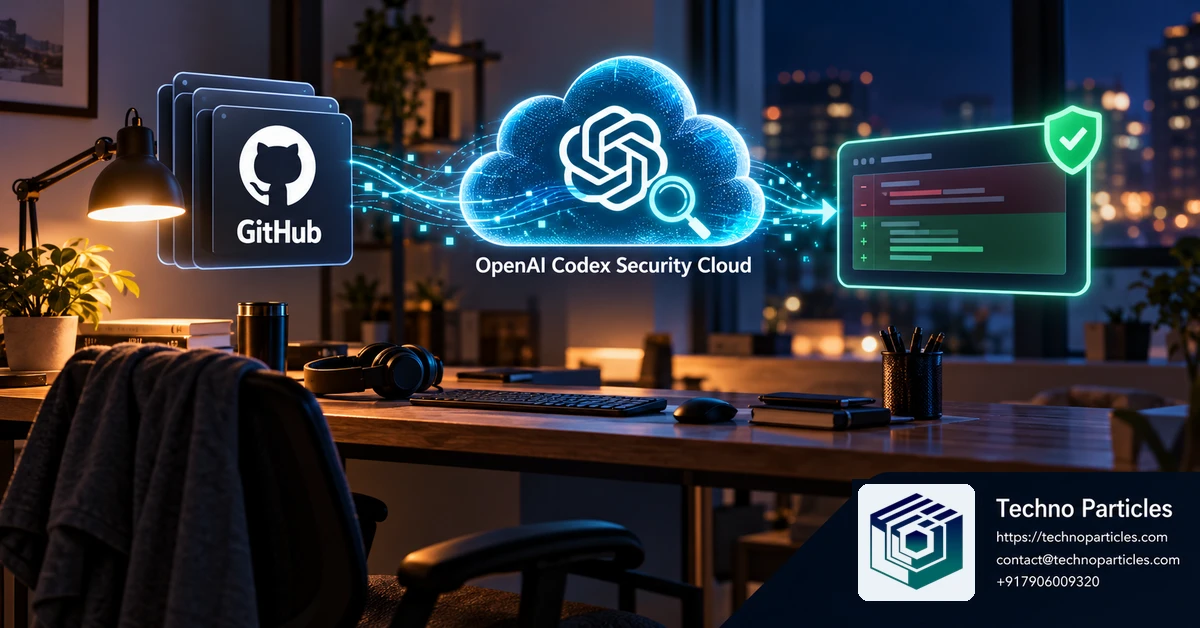
How teams can prepare for Codex Security Cloud scans
Before enabling OpenAI Codex Security Cloud for a busy repository, teams should define the information and permissions the workflow can access. Repository owners can begin with a narrowly selected project, confirm how findings will be assigned, and decide which branches may receive a proposed pull request. This makes the phrase âOpenAI Codex Security Cloud scans GitHub and prepares fixes while youâre awayâ meaningful without treating background analysis as automatic authorization to change production code.
Start with a controlled pilot
A pilot should include representative code, an agreed test command, and a small group of reviewers who understand the applicationâs architecture. Engineers can compare the cloud investigation with existing alerts from deterministic scanners, SARIF imports, GitHub code-scanning, Dependabot, advisories, or an issue tracker. The comparison should focus on useful evidence: whether the finding explains a reachable code path, identifies realistic conditions, and proposes a change that can be tested.
Because OpenAI describes the service as a research preview and says larger scans may take several hours, expectations should be set before adoption. A scan that runs asynchronously may be valuable for overnight or low-activity periods, but teams still need a visible status, an escalation path, and a policy for findings that remain unresolved.
Protect sensitive repositories
Access should follow least-privilege principles, with separate controls for repository reading, issue creation, and pull-request preparation. Teams should review what code, configuration, test data, and secrets could be exposed during analysis, and remove unnecessary credentials from the environment. Security logs and repository audit trails should remain part of the review process.
For businesses developing customer-facing applications, an SEO-aware website development workflow can include these same review gates alongside testing, dependency management, and release controls. The immediate benefit is not simply finding more alerts; it is giving engineers better context and a safer starting point for deciding what deserves a fix, a deeper investigation, or documented acceptance.
What the early results should tell security teams
The first practical test for OpenAI Codex Security Cloud is not how many alerts it can produce. It is whether its repository-aware investigation helps engineers separate credible vulnerabilities from theoretical concerns and reach a safe decision faster. A useful finding should explain the affected code path, identify the conditions that make exploitation possible, and show why the proposed fix addresses the underlying weakness.
Teams should also expect human review to remain central. Codex Security Cloud may prepare a focused patch and, when feasible, a regression test, but engineers still need to verify the change against application behavior, security policy, and operational requirements. A patch that looks correct in isolation can still affect authentication flows, permissions, data handling, or compatibility with connected services.
A measured role for asynchronous security work
The strongest use case is asynchronous investigation. A scan can run during quieter periods, continue while developers are unavailable, and present evidence for review when the team returns. That can reduce the time spent reproducing an issue from the beginning, especially in large repositories where the relevant behavior is distributed across several files or services.
However, the research-preview status and potentially long scan times make disciplined rollout important. Organizations should begin with limited repository access, clear ownership, known test commands, and documented approval rules.


Leave a comment