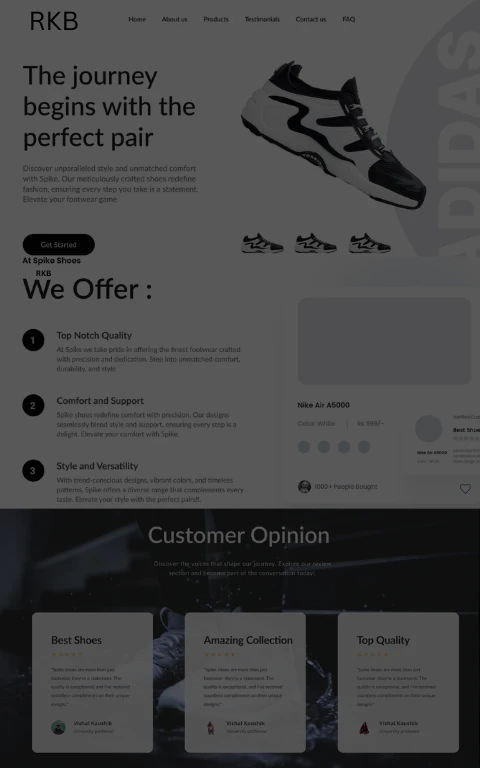
Catalogue & shopping experience
Plan product types, variants, categories, search and merchandising. Discuss the content and imagery customers need to make a confident purchase.
Online stores designed around your catalogue, checkout, payments and order operations.
For businesses launching online sales or improving an existing shopping and fulfilment experience.
Serving businesses worldwide with a project-specific scope, estimate and support plan.
Use these areas to discuss deliverables, dependencies and acceptance criteria. The final scope is agreed for your project.
Plan product types, variants, categories, search and merchandising. Discuss the content and imagery customers need to make a confident purchase.
Define cart rules, account requirements, payment methods and shipping integrations. Review taxes, inventory and order states with the business before implementation.
Test successful and failed payments, confirmation messages, stock updates and mobile checkout. Agree administrative access, policies, reporting and ongoing support.
| Approach | When it fits | What to consider |
|---|---|---|
| Standard online store | A conventional catalogue and checkout. | Product data, payments and fulfilment. |
| Custom commerce workflow | Special pricing or order rules are required. | Rule clarity, integrations and testing depth. |
| Store redesign or migration | Existing products and customers must be preserved. | URL redirects, data mapping and operational continuity. |
Share your priorities and target date. Confirm inclusions, third-party costs and ongoing responsibilities in the proposal.
See selected projects, then talk to us about the scope your business needs.
Practical answers to help you prepare a useful project brief.
Define the required variants, stock rules and source of inventory data in the project brief. A small catalogue managed manually and a store connected to a warehouse system require different implementation and testing.
Confirm the gateway, merchant account owner, supported payment flows and how payment status reaches the store. Test failed, pending and successful payments, refunds where required and the prevention of duplicate order processing.
A migration depends on export access and the quality of existing data. Map products, categories, images and URLs before importing. Customer and order data may need separate handling, access controls and validation.
Check product options, cart updates, delivery details, validation messages and payment hand-off on relevant devices. Customers should be able to see the final order total and understand what happens after payment.
Techno Particles · Working with businesses worldwide. Share your requirements, existing systems and priorities.