

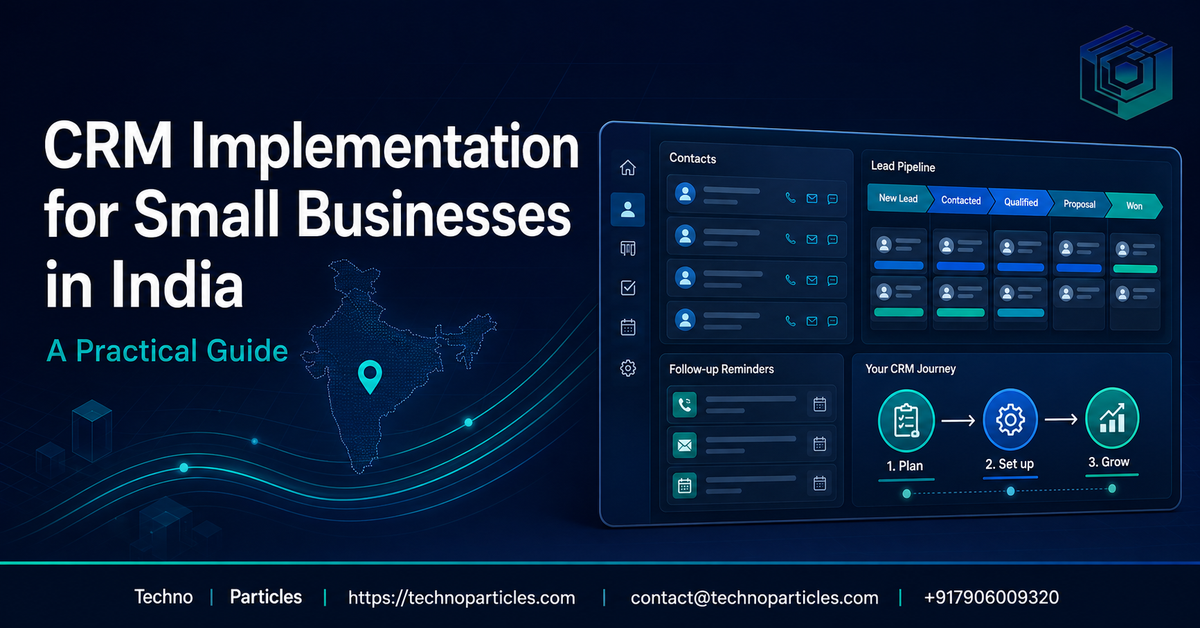
For many Indian small businesses, customer information is spread across WhatsApp chats, spreadsheets, email threads, and notebooks. That makes every enquiry dependent on memory and makes follow-up difficult to manage. CRM implementation for small businesses in India brings these conversations, tasks, and customer records into one practical system. The goal is not to buy the most powerful platform. It is to create a reliable way to capture leads, understand their needs, assign responsibility, and build repeatable sales habits. With the right preparation, even a lean team can gain visibility without adding unnecessary complexity or cost.
Why implementation matters more than software selection
Software alone does not improve customer relationships. Results come when people use the system consistently and when the system reflects the way the business actually works. A small manufacturer may need enquiry tracking, quotation reminders, and distributor records. A coaching centre may need counselling follow-ups, admission stages, and parent communication. A retailer may prioritise repeat orders, service requests, and customer history. These needs are different, so implementation should begin with business workflows rather than a list of fashionable features. A thoughtful rollout also helps the team see the CRM as a useful daily workspace instead of another reporting obligation.
Start with a clear business case
Begin with a short description of the problems the CRM must solve. You may want faster responses to new leads, fewer missed follow-ups, better sales forecasting, cleaner customer data, or a shared view of service conversations. Connect each goal to an observable business action. For example, every website enquiry should receive an owner, a next-step date, and a recorded outcome. This simple definition creates a practical baseline for implementation. It also helps owners avoid paying for complicated modules that do not support immediate priorities. A documented business case keeps decisions focused when vendors present long feature lists.
CRM implementation for small businesses in India: map the workflow
Map the customer journey from first contact to conversion and retention. Identify every source of demand, including website forms, social media, referrals, marketplaces, phone calls, exhibitions, and messaging platforms. Then define the stages a lead passes through, such as new, contacted, qualified, proposal sent, negotiation, won, or lost. Each stage should have a clear meaning and an expected next action. Decide who can create, edit, assign, and close records. For Indian SMEs, it is also useful to document regional sales territories, language preferences, tax-related details, distributor relationships, and the difference between a genuine prospect and a low-intent enquiry.
Keep the first release focused
A manageable first release usually includes contact records, lead capture, a sales pipeline, tasks, reminders, notes, and basic reports. Additional workflows can follow after the team has built confidence. Avoid recreating every spreadsheet and paper process on the first day. Select the fields that people truly need to complete their work, and make important fields easy to understand. A focused rollout reduces training time and exposes process gaps early. The team can later add quotation templates, ticketing, campaigns, integrations, or advanced permissions after usage patterns show that those additions will create value.
Prepare and protect customer data
Data migration is one of the most important parts of CRM implementation. Review existing files, remove duplicate contacts, standardise names and phone formats, and separate active prospects from outdated records. Create rules for mandatory fields, ownership, consent, and data access before importing anything. Sensitive information should be visible only to authorised users, with sensible password and backup practices. Decide how often records will be reviewed and who is responsible for correcting errors. Clean data gives managers a trustworthy pipeline and helps salespeople find useful context quickly. It also prevents a new CRM from becoming a polished version of an old, unreliable spreadsheet.
Prepare the team before launch
Before launch, define simple usage standards: when a lead must be entered, how quickly it should be assigned, where notes belong, and when a deal can move to its next stage. Choose one or two internal champions who can answer questions and reinforce good habits. Short, role-based training is more effective than a single technical demonstration. Show salespeople how the CRM helps them remember tasks, show managers how to review pipeline health, and show owners how reports support decisions. Businesses seeking structured digital solutions and services can also review their wider technology needs while planning the CRM rollout. A clear implementation plan makes adoption easier and creates a strong foundation for the next phase.
CRM Implementation for Small Businesses in India: A Practical Guide - Techno Particles
Choose a CRM that fits your operating reality
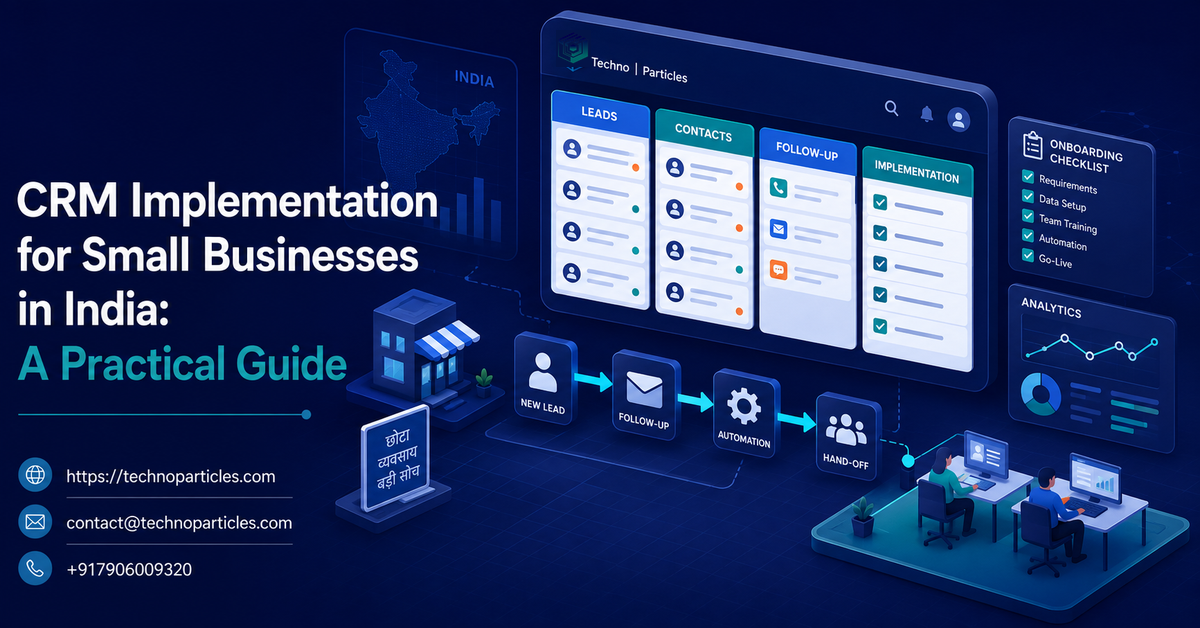
The best CRM for a small business is one the team can understand, access, and maintain. Compare platforms by workflow fit, mobile usability, reporting, integrations, permissions, support, and total operating cost. A cloud system may suit a distributed sales team, while a business with specialised processes may need a customised solution. Check how easily the CRM connects with website forms, email, calendars, accounting tools, customer support, and communication channels. Do not evaluate only the demonstration account. Ask whether the system can handle your actual lead stages, naming conventions, approval rules, and reporting requirements. The right choice leaves room for growth without forcing the company into an unnecessarily complex operating model.
Build useful automations carefully
Automation should remove repetitive work while preserving human judgement. Start with practical triggers: assign incoming leads by territory or product, create a follow-up task after a quotation, notify a manager when a high-value opportunity stalls, and send a reminder when an activity is overdue. Use templates for routine messages, but allow employees to personalise communication when context matters. Test every automation with realistic records before activating it for the whole team. Poorly designed rules can create duplicate tasks, send irrelevant messages, or move opportunities through the pipeline without genuine progress. Good automation is quiet, predictable, and easy for employees to understand.
Connect lead generation with follow-up
Lead capture is valuable only when the CRM records what happens next. Website forms should create complete records with source information, product interest, location, and an assigned owner. Campaign responses should be marked clearly so the team can compare lead quality across channels. Sales staff need a quick way to record calls, meetings, quotations, objections, and agreed next steps. A connected process prevents marketing activity from becoming a separate data island. When a business combines its CRM with CMS options and well-structured website forms, it can keep content, enquiries, and customer journeys more closely aligned.
Make the mobile experience practical
Many small-business teams spend part of the day travelling, visiting customers, attending trade events, or working from different locations. A usable mobile experience lets them update a contact, add a note, schedule a task, or check an opportunity without waiting to return to a desktop. Keep mobile forms short and prioritise the information needed immediately. If the CRM is slow, difficult to navigate, or dependent on a complicated connection, employees will return to informal channels. Mobile access should support the same standards as the main system, including ownership, timestamps, reminders, and clear activity history.
Measure adoption and commercial progress
CRM reporting should answer business questions rather than produce attractive dashboards with no action behind them. Track the number of new leads, response activity, stage movement, overdue tasks, conversion patterns, lost-deal reasons, and repeat opportunities. Review data quality indicators such as missing owners, incomplete contact details, and records without next steps. Managers should use these reports in regular conversations, helping employees remove obstacles and improve follow-up. Compare performance against the business case created at the start of the project. If faster response, clearer ownership, or better visibility was the goal, those outcomes should guide the review.
Plan change management as an ongoing process

Support sales, service, and retention together
A CRM should not stop being useful after a deal is marked won. Record onboarding tasks, delivery expectations, service conversations, renewal dates, and opportunities for additional support. This shared history helps employees respond with context when a customer contacts the business. It also reveals recurring questions and operational issues that may require better documentation or product changes. Small businesses can begin with a simple handoff checklist between sales and delivery, then expand into service workflows as volume increases. A connected customer record gives the owner a more complete view of relationships and reduces dependence on one employeeâs memory.
Use CRM insights to improve marketing
Once customer and lead data is reliable, it can guide more relevant marketing decisions. Review which sources produce qualified conversations, which industries move through the pipeline, and which objections appear repeatedly. Use those insights to refine landing pages, educational content, offers, and follow-up sequences. Segmentation should be based on useful business context, such as location, industry, buying stage, or product interest, rather than collecting fields that nobody uses. CRM data can make marketing more focused, but it should still be handled responsibly. Clear consent practices, access controls, and respectful communication protect trust while improving relevance.
Connect the CRM with the website experience
Your website is often the first place a prospect forms an opinion about the business. Forms, landing pages, chat tools, and calls to action should make it easy for the right visitor to start a conversation. The CRM should capture enough context for the sales team to respond intelligently, including the page or service that prompted the enquiry. A useful website also sets expectations about response times, service areas, and next steps. Teams working on website development should consider CRM handoff requirements early, so lead capture and user experience support one another instead of being treated as separate projects.
Keep the customer journey clear
Clarity matters for both employees and customers. Every pipeline stage should describe a real decision or action, not a vague feeling that an opportunity is progressing. Define exit criteria for each stage and use consistent reasons for lost deals, postponed purchases, and unqualified leads. This makes reporting more useful and helps managers coach specific behaviours. Customer-facing messages should remain accurate and timely, especially when a lead is waiting for a quotation, demonstration, approval, or service update. A clear journey reduces confusion, makes handoffs easier, and creates a more professional experience even when the team is small.
Know when to customise the system
Configuration is usually the right starting point, but some businesses have workflows that standard settings cannot represent cleanly. Custom fields, approval paths, dashboards, role permissions, or integrations may be justified when they remove a recurring bottleneck. Customisation should be documented and tested so future employees understand how the system works. Avoid building features simply because they are technically possible. Each change should have an owner, a clear purpose, and a plan for maintenance. Businesses can review relevant digital projects and discuss their requirements with an implementation partner before committing to a larger build.
Make the investment sustainable
Budget for more than the



Leave a comment