

The UBTECH Walker S3 humanoid robot launch and 30-second battery swap puts a practical factory question alongside a striking mobility demonstration: how much time can a humanoid robot spend working when its battery needs attention? UBTECH introduced the robot through a movement-focused video followed by an announcement positioning it for industrial work.
The headline battery figure is a company-reported hot-swap time, while the first video shows movements including rappelling and crawling. Together, they point to two different parts of the product story: keeping a robot supplied with power and expanding the range of environments it can navigate.
| Launch detail | Reported information | What it describes |
|---|---|---|
| Mobility demonstration | Rappelling, sprinting, crawling and vaulting | Movements shown in UBTECH’s official video |
| Battery operation | Dual-battery hot swap in 30 seconds; up to eight hours per work session | Company specifications reported by IT Home |
| Industrial positioning | New-generation industrial humanoid | UBTECH’s formal announcement |
What changed in the Walker S3 reveal?
UBTECH’s November 26, 2026 post introduced Walker S3 through a company demonstration of physical movement. The footage showed the robot rappelling, sprinting, crawling, vaulting and moving in coordination. Those scenes give viewers a way to understand the movements UBTECH chose to highlight at the first reveal.
On November 29, UBTECH followed with a formal industrial announcement that framed Walker S3 around movement, responsiveness, task capability, intelligence and modular engineering. That second stage shifted the emphasis from visible mobility to the broader question of how the robot might fit into industrial operations.
For a business considering an unfamiliar technology, defining the intended workflow is a useful starting point: a project consultation can help establish the requirements a proposed deployment would need to meet.
Why the 30-second battery swap matters for factory uptime
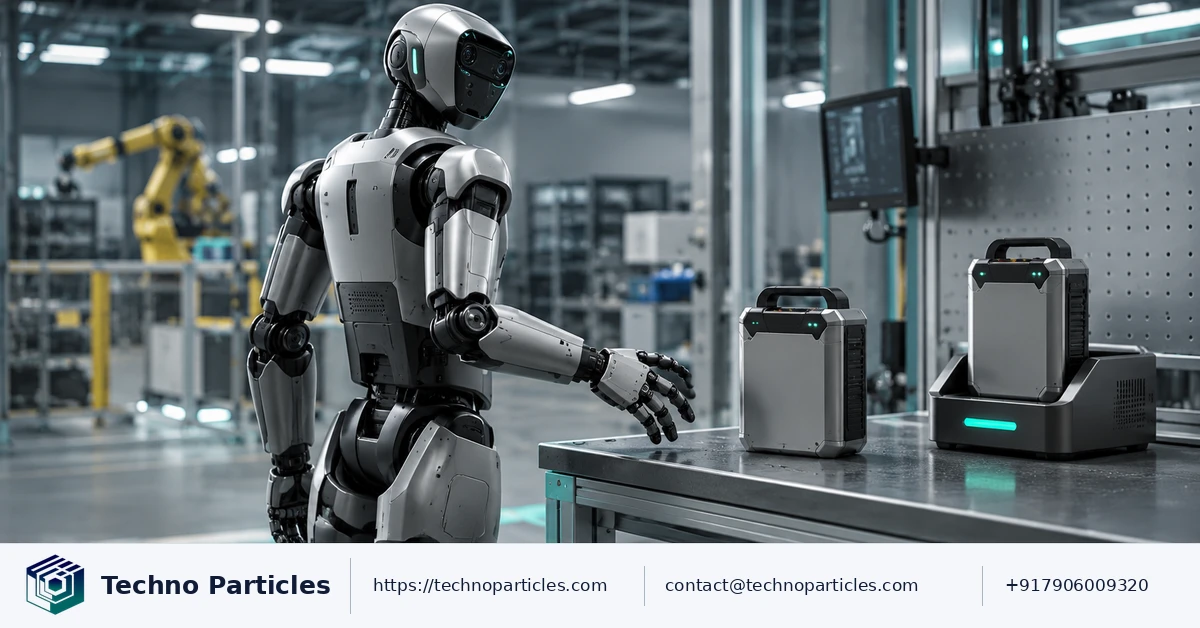
A hot swap is a way to replenish a robot’s power without treating every depleted battery as the end of its working day. For a factory, the potential benefit is less time waiting for charging and more flexibility in scheduling work. MyDrivers’ launch coverage reports UBTECH’s dual-battery approach and describes the battery replacement time as a company claim.
The swap figure is only one part of an operating cycle. A charged spare pack must be ready when needed, and staff need a suitable place and procedure for handling batteries. If a replacement takes place away from the work area, travel to and from that location also affects how long the robot is unavailable for its assigned task. Charging the removed pack becomes a separate activity that must fit around the next replacement.
For context, UBTECH’s Walker S2 product page describes autonomous battery swapping within three minutes. That is a specification for the earlier S2, not proof that the S3 replaces its own battery. The available S3 information also does not establish where its reported 30-second measurement starts and ends, so the two figures should not be treated as a controlled comparison.
Planning power replenishment is therefore a workflow question as well as a hardware question. For example, a team assessing an internal deployment could map battery availability alongside shift changes and other operational handoffs; an employee management system may be relevant where those handoffs involve staff scheduling. The value of a quick exchange depends on how it fits the actual operation, including the time needed to make the next charged pack ready.

What changed beyond the battery system?
Walker S3’s industrial design combines a lighter body with changes to sensing, computing and maintenance. IT Home’s report of UBTECH’s specifications puts the robot at 59.3 kg, with 51 degrees of freedom and a claimed walking speed of up to 2 metres per second. Degrees of freedom describe the independent movements available to a machine; the count alone does not establish how accurately it can perform a factory task.
Sensing and control
The reported hardware includes nine-camera panoramic vision and 3-megapixel stereo vision. Panoramic coverage can give a control system information from around the robot, while stereo vision uses images from different viewpoints to estimate depth. How useful either is will depend on the visibility and geometry of a particular workspace.
UBTECH also reports 2,070 TOPS of computing capacity and control based on a vision-language-action, or VLA, model. TOPS measures theoretical operations per second rather than task success. A VLA system connects visual information and language with actions, but the figure does not by itself explain which tasks the robot can perform reliably. For teams considering how such models fit into a wider workflow, generative AI services cover related questions about integration and human review.
Modular maintenance
MyDrivers’ coverage describes replaceable arm modules and end effectors, the attachments at the end of a robot’s arms. Modularity can make it possible to change a component without replacing the entire machine, although the practical benefit depends on spare-part availability and the work required to restore the robot to service.
UBTECH also claims percentage improvements in areas including hand precision and repair time. Those figures are company claims; independent testing has not established the results or the conditions under which they were measured.
How to evaluate Walker S3 in a real deployment
A useful deployment evaluation starts with one defined job, such as moving an item between two workstations. Record the item’s weight and dimensions, the route, the required placement accuracy and the number of completed cycles. These conditions give the buyer a basis for judging whether a robot meets a particular operational need.
The Walker S3 mobility demonstration shows movements selected by UBTECH; it does not establish that the robot can perform a production job repeatedly. A site trial should therefore include the actual floor surfaces, lighting, obstacles and handoffs involved in the proposed task.
Measure the work, not just the motion
Count successful cycles and record failures against a written definition of success. For a placement task, that definition could include whether the item is delivered to the correct location without damage. Record how often a person must intervene and whether the robot can resume from the interruption or must restart the cycle.
Throughput should reflect the whole job: time spent moving, handling the item, waiting for a handoff and recovering from interruptions. Compare that result with the operation’s required output over the same period. A fast individual movement has limited value if the complete process cannot meet the required pace.
Turn trial results into a deployment decision
Ask the supplier to document the load used in the trial and demonstrate recovery after a representative interruption. Track elapsed time from the interruption until the robot returns to acceptable work, including any operator assistance. Record results across repeated runs so that one successful cycle does not determine the assessment.
A written workflow can also identify responsibilities at each handoff. Project consultation services cover requirements discovery and workflow analysis, which can help a team define those responsibilities before comparing trial results with its operating needs.
Walker S3 availability, pricing and buyer information
UBTECH’s Walker S3 announcement presents the robot as an industrial humanoid, but it does not establish a public price, ordering process or delivery schedule. The launch coverage also does not provide a public price or delivery date. Buyers should treat purchase terms as unresolved until UBTECH provides them.
Market eligibility is another open question. An industrial announcement does not by itself establish which countries can order the robot, where support will be offered or whether local servicing is included. These details can affect the practical cost of ownership even when a supplier quotes a purchase price.
What to clarify before budgeting
Customer trials and an S3 payload rating have not been publicly verified. A buyer assessing a particular application needs the permitted load and operating conditions for that model; the payload listed on UBTECH’s Walker S2 page applies to S2 and cannot be used as an S3 specification.
A quote would also need to identify what it covers. Battery packs, replacement components, software access, maintenance and on-site support are separate cost questions unless the supplier explicitly includes them. Delivery terms and support arrangements matter when estimating when a robot could enter service and what it would cost to keep it operating.
For organizations preparing a budget, the services page describes the types of digital delivery support available for related business systems. Any integration work should be costed separately from the robot unless the supplier’s proposal explicitly includes it.
Conclusion
The UBTECH Walker S3 humanoid robot launch and 30-second battery swap warrant consideration when measured uptime and task economics meet a factory’s operating requirements. Request a written site-pilot plan specifying swap timing, load, task success, operator intervention and costs.

Leave a comment
Your email stays private. You can see your comment immediately on this browser. Others see it after approval.